Review: Courage of the Shipyard Girls

If you’ve read any of this blog so far, you’ll have picked up a slight hint that I like The Shipyard Girls. I plan my reading year around The Shipyard Girls. I stopped reading another book so that I could read this one. I have put aside a new book for which I have waited a year to be released, so that I could read Courage of the Shipyard Girls. As usual, I’ll try my best to keep this spoiler-free since Courage has only just been released and I know not everyone reads like me (i.e. consuming books like an anaconda desperately devouring its prey). For anyone who is totally new to The Shipyard Girls saga however, I would suggest you read my earlier post first to get a general idea of what the saga is and why it’s so brilliant (shameless self promotion there).

In the words of the great Julie Andrews, the beginning is a very good place to start. Like anyone who read Victory for the Shipyard Girls, I went into Courage of the Shipyard Girls with an overwhelming anxiety over what had happened to Tommy. I was so cheesed off about this at the end of Victory that, when I went to the signing for it, I said probably no more than five words to Nancy Revell. This was in part due to my anxiety at meeting a hero, but more to do with a desire to retain self-control and not flip tables while screaming in poor Nancy’s face ’IF YOU’VE KILLED TOMMY OFF I WILL COME AFTER YOU’, and being publicly blacklisted from my local Waterstone’s. Again, I don’t want to spoil it for anyone who hasn’t finished yet, but all I will say is that I will be going to my local signing for Courage, and there is no risk whatsoever of me flipping tables.

Then the other big development from Victory was Helen’s pregnancy which, I must admit, I was really excited for because I just wanted to see that little snake get what was coming to her. However I am going to hold my hands up and admit something I never thought I would say – I now feel sorry for Helen and sort of like her. Anyone who hasn’t finished Courage yet has probably just made the decision to stop reading this post, but I’m telling you once you’ve finished this one your opinion will be different. The relationship between Helen and Gloria was really sweet, as Gloria has somehow managed to melt the ‘ice queen’ side of Helen and draw out her kinder side that nobody knew was there (except Gloria and Nancy Revell). Also, at the end of Courage Helen is initiated into the Women Welders’ squad, which is something I never saw coming but am now looking forward to seeing pan out more. I have said before that there are no Kellys or Michelles in Thompson’s Shipyard, and while all of the main squad retain their fierce Beyoncé status, I have to say that although I like Helen being part of the crew, I don’t fully trust her yet and she remains at Kelly or Michelle level. This will be reviewed after book #7 however, because it’s become very clear how much Nancy Revell loves a plot twist and changing the reader’s opinion of the main characters – which is one of the many reasons why this saga consistently feels fresh and doesn’t feel close to being done.

Seeing another side of Polly was another thing that really stood out for me in this one. Having a saga with so many principal characters (and even more supporting characters) must be so difficult to write – I have images of Nancy Revell spinning plates like a circus performer trying to keep all the storylines going. Polly was my favourite Shipyard Girl in the beginning but she seemed to fade out in favour of some bigger plots in the last couple of instalments. It was great to see more of Polly again but even more intriguing to see her more vulnerable side. We all know our Women Welders are made of strong stuff, so seeing one of them hurting was a breath of fresh air, in an odd way. And for existing fans of the saga like myself, I found the juxtaposition of Polly and Bel’s relationship really interesting as it reminded me of the first Shipyard Girls book when Polly found Bel on the bedroom floor following the news of Teddy’s death, and was quite reminiscent of Polly taking Bel home when they were children. I always had the image in my head of Polly being the sturdy one who looks after Bel and it was interesting to see this go the opposite way.

“Rosie didn’t question whether Polly was up to work because she knew that she wasn’t up to not working. Building ships might not mend her broken heart, but it would help her survive”

The whole air raid sequence was the high point of this book for me, and I can’t fathom anyone disagreeing with me on that point. Given the time period in which this saga is set, there have been tense moments of a similar nature before, but never quite on this level and this was the first time a Shipyard Girls chapter genuinely drew tears out of me. Perhaps it’s because by this point in the series the readers are now extremely invested in the characters, I certainly feel like I know these girls as friends, so having them placed in such an intensely dangerous situation was very difficult to read. It was the first time in this saga I properly felt the emotional impact of the period in which the girls were living and I know this must be absolutely nothing compared to the real life experience of not knowing whether loved ones were safe after air raids; but for people like myself with no real connection to this time period I think this is as close as we can get to feeling that, which is no easy feat for an author so once again, hats off to Nancy Revell for making these stories come alive for the reader.

I know everyone says this about new books, but I would hand on heart say this was my favourite in the whole Shipyard Girls series. I loved all the previous books equally as they all tell different tales and have different themes, but taking characters I thought I knew and showing me different sides of them, combined with the air raid sequence absolutely blew the other instalments out of the park. The air raid sequence was the high point of the whole series for me, it was like a film’s climactic battle scene where every character had her bravery and strength put to the ultimate test.

“Blimey, the whole squad was here…Rosie looked like Boadicea going into battle with her cohorts behind her”

The timing of the release of this book is also very apt, in my humble opinion, because Sunderland is getting a bit of bad press at the moment. If you ask Netflix, we’re all hooligans with no other purpose than to watch football and brawl in the streets; if you ask the national news, we’re all racists who voted for Brexit like turkeys voting for Christmas; and if you ask the Crime and Investigation Network, this is a shell of a formerly great city with murder rates and drug problems rising in equal measure following the closure of the pits and the yards. To a degree, Sunderland is some of these things, but we are also the city that inspired Alice in Wonderland, that brought the world The Futureheads and Vaux beer, where Joseph Swan was inspired to invent the lightbulb and two of our lads are currently on the England football squad. This is a city of hard workers who would give their neighbour their last stottie if they needed it more, and would do so with a smile. As the Sunderland-born daughter of a former shipyard worker I can categorically verify that Mackems are hard working, friendly people who make strong ships and even stronger women, and if Nancy Revell hadn’t allowed the voices of our former Shipyard Girls to be heard, this may well have been forgotten. So on a personal level, I would just like to take the opportunity to say thank you to her.

“From the moment the klaxon sounded out the start of the day’s shift, every man and woman at Thompson’s shipyard worked flat out, as did every other worker in every other shipyard, engine works, factory, ropery and colliery on both sides of the river.
Their actions spoke louder than their words. They would not be beaten”

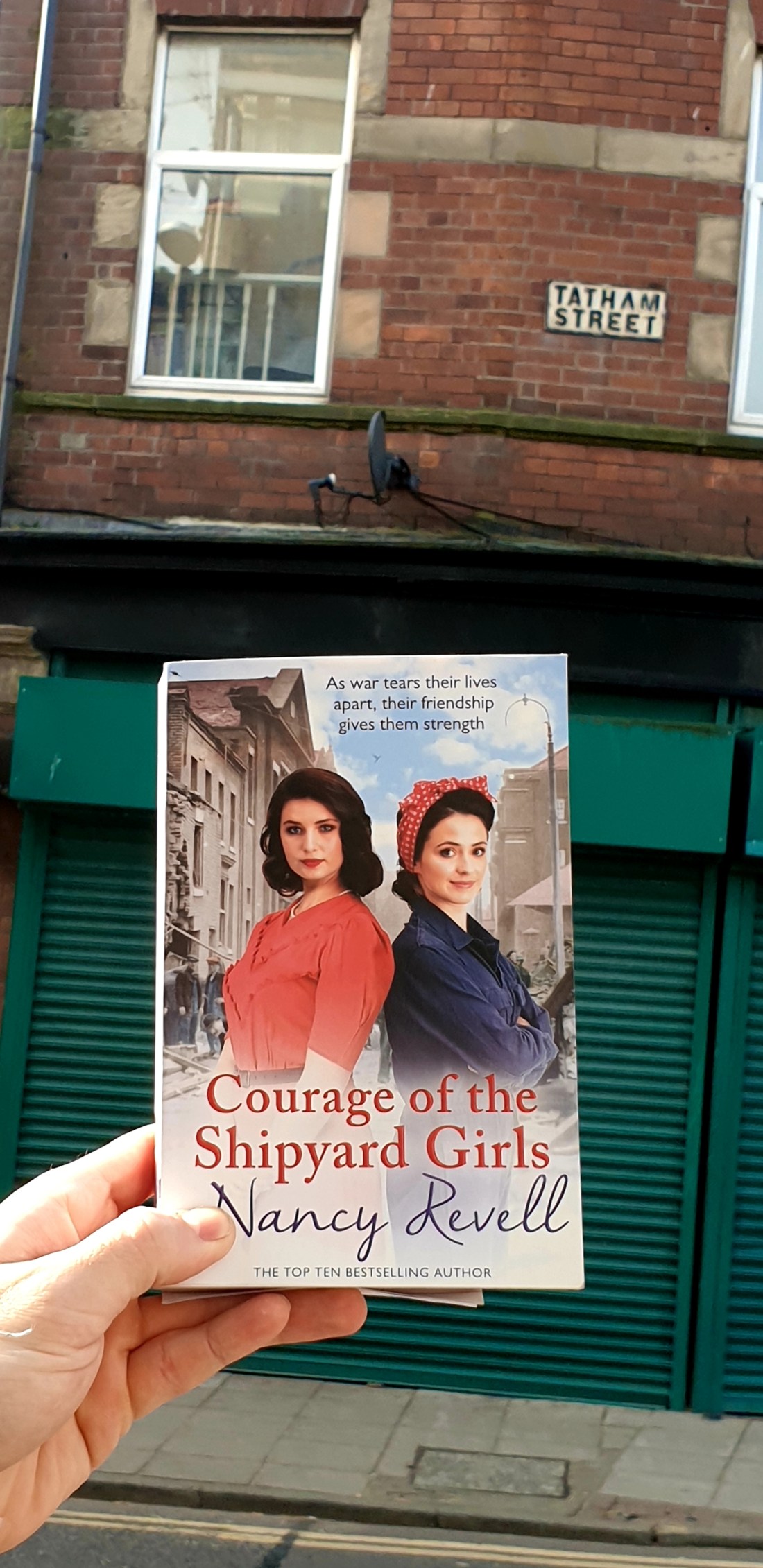
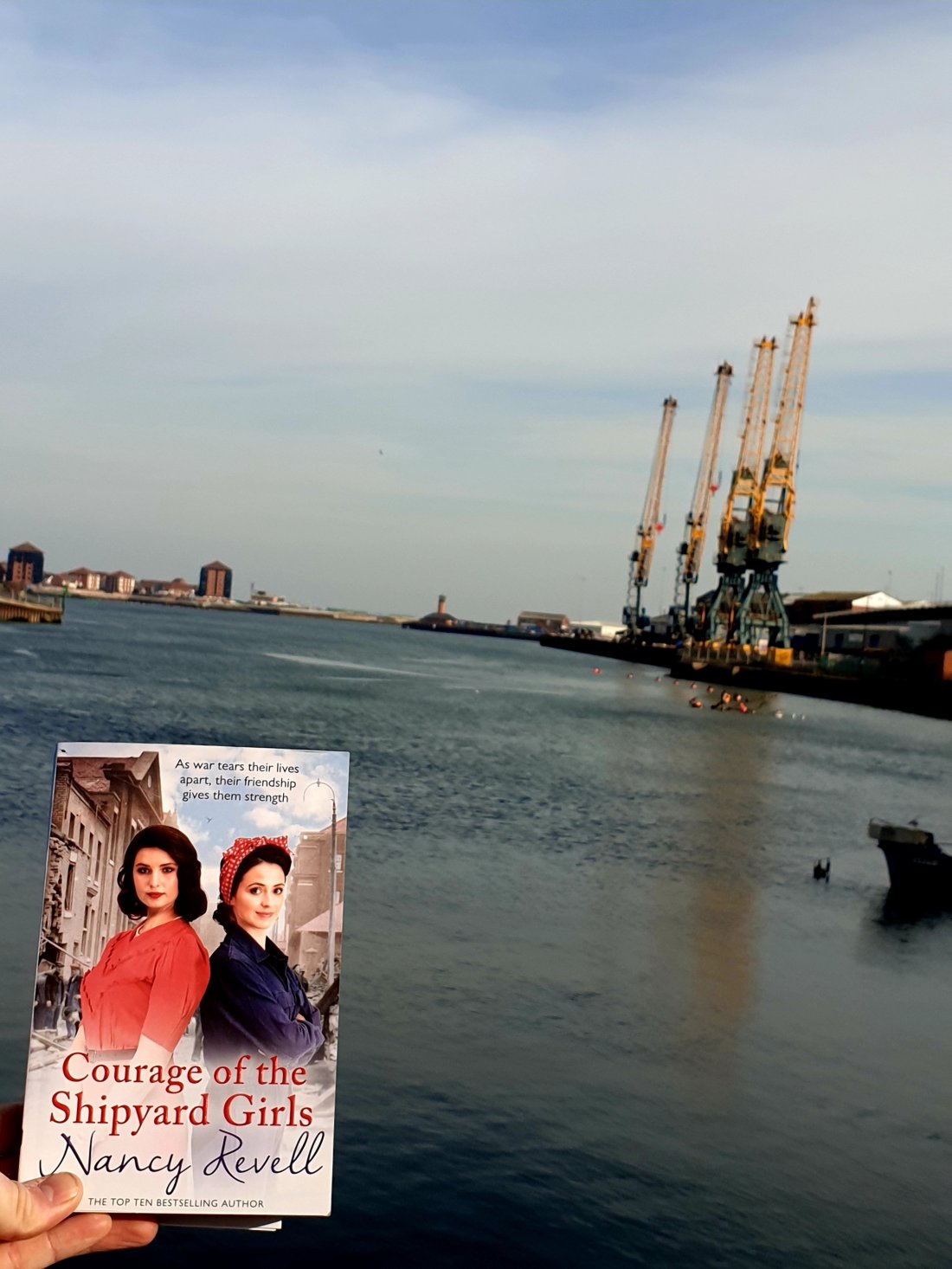
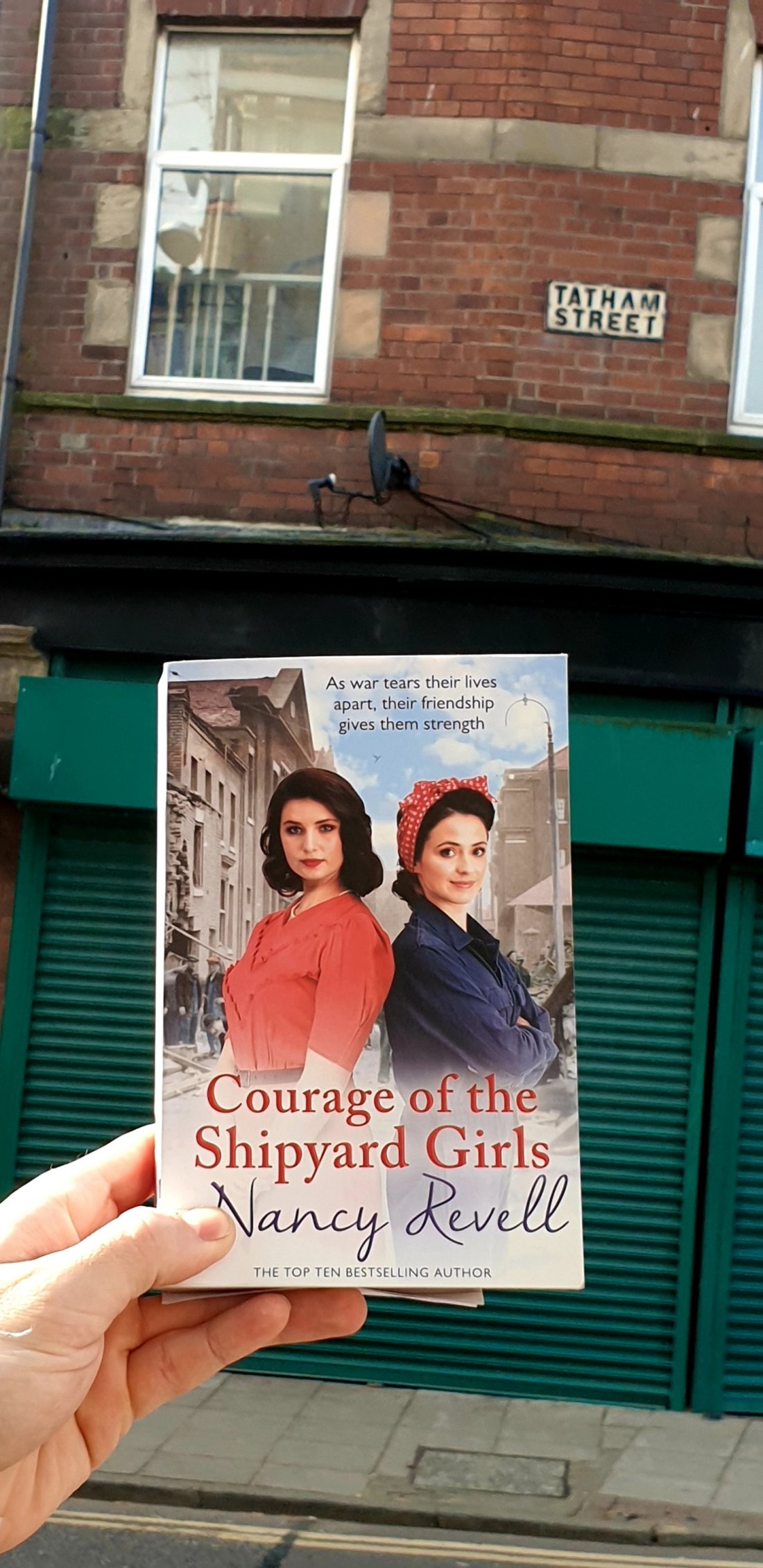
Took my copy on a little walk around Sunderland…

Review – The Stone Circle by Elly Griffiths

It’s almost embarrassing that I’ve had this blog for about six months now and have yet to make a specific mention of my love for Elly Griffiths’ Ruth Galloway series, but the most recent instalment was released at the beginning of February so it seemed the perfect time to profess said love. I first came across this series back in 2017 when I picked up The Woman in Blue by chance at my local Waterstone’s and was completely hooked, so I did what any rational person would do and consumed the previous seven books in the space of a couple of weeks. Although I loved the entire series, I do wish I’d realised at the first instance that the book I’d picked up was part of an existing series and had read them in chronological order because I ruined some quite major plot twists for myself by starting on book eight.

Ruth is one of my many, many literary heroes. Living alone in a cosy yet creepy cottage on the edge of Norfolk’s saltmarsh which I always imagine as Kate Winslet’s cottage in The Holiday but surrounded by an eerie fog, is basically the dream. She’s independent, intelligent and fiercely feminist which I love, and her day job is as an archaeology lecturer but somehow seems to get called in by Norfolk Police to examine murder victims’ bones at regular intervals. The only real plot hole in this saga is that people continue living in this area despite there seeming to be a new murder case approximately every six months.

Whilst I’m on the topic of Elly Griffiths’ fictional version of Norfolk Police force, this brings me to DCI Harry Nelson. Ah Nelson, how you confuse my emotions. I hated Nelson at the start of this series – he’s a narcissistic, indecisive pig who just loves to have his cake and eat it too. However, he’s also incredibly charming and clearly cares very deeply about both Ruth and his wife – we’re twelve books in now and I still go back and forth over whether I want him and Ruth to ride off into the sunset together and spend their remaining years solving crimes and doting on Kate, or stay as far away from each other as humanly possible because in many respects they are simply not compatible. To maintain any good saga, characters have to continually develop and this is something that Elly Griffiths absolutely nails. Keeping a story fresh after twelve books about the same set of characters is no easy feat, but I still feel like I’m seeing new sides of everyone every time I pick up the next book.

The Stone Circle probably wasn’t my favourite of all the Ruth Galloway series; I’d struggle to say which one was because I read them in such quick succession but A Dying Fall definitely stood out for me – the undertones of Pendle Witches made it extra creepy, though all Ruth books hvea given me a few creepy chills. However, that’s not to say I didn’t love The Stone Circle. The pinnacle of a good saga is that when a new book comes out, you feel like you’re catching up with old friends and this was no exception. Having a lot of principal characters, all of whom have intertwining plots and secondary characters around them, keeps the story fresh all the time and Elly Griffiths achieves that perfect balance for the reader where we can dive back in and know the characters inside out, but still be excited about fresh plots and new journeys on which they’re embarking.

Like every book in the Ruth Galloway series, I was immensely frustrated by The Stone Circle not answering the big question of what the future holds for Ruth and Nelson, and I’m still conflicted as to whether I want them to be together because Elly Griffiths does not like making things simple. The Stone Circle followed Ruth’s usual mysterious pattern of there being a really obvious culprit for whom it makes logical sense to have committed the crime, but you just know there’ll be a twist and the murderer will end up being someone you completely disregarded after the first few pages. Twelve times Elly Griffiths has fooled me with that. Twelve. The introduction of new characters created yet another layer to Ruth’s complicated story, and I’m quite interested to see if Star returns in book Thirteen and I would also like to keep seeing more of Michelle’s point of view. It would be great if Frank is explored more next too, because as much as I love Nelson I do also love Frank – which is precisely Ruth’s dilemma at this point in her journey.

Although it feels at this point like I’ve under-sold The Stone Circle, I do highly recommend the overall Ruth Galloway series. Each time I pick up an RG book I get completely sucked into her eerie world of lonely countryside and suspicious dark strangers appearing in the dead of night, which always makes me feel like I need to put the fire on and dim the lights – even if it’s the height of summer.

Review – The Stranger Diaries

Ah, the Waterstone’s January sale, how I love thee. Said sale was so good this year that I actually bought hardbacks! I never buy hardbacks; they hurt to hold, they look ugly on the shelf and the dust jacketsalways slide off – it’s a no from me. However, I’d had my eye on this Elly Griffiths gem for a while so was beyond thrilled to have found it half price. I went into The Stranger Diaries (TSD) with mixed feelings; I am a huge (probably too much so) fan of Elly Griffiths’ Ruth Galloway series, but I tried her Stephens and Mephisto series and just could not get into it. So, I assumed this standalone novel would be like either one of the above, a literary Marmite, if you will. And I’m pleased to say that, much like actual Marmite, I loved it.

For existing Ruth Galloway fans, it was very Galloway-esque (is that a word?) so of course I was completely invested by chapter two. Clare Cassidy is very much a less likeable Ruth Galloway, she’s very middle class and somewhat of a loner when she isn’t teaching but you do find yourself wondering why something seems slightly ‘off’ about her. Of course, with this being an Elly Griffiths, I trusted nobody until the very last page. The thing I really love about Griffiths’ work, which was absolutely the case with TSD, is that every character, no matter how insignificant, has a rich history. Not only does this make you care about what happens to the characters and their individual journeys, but it always completely throws me off the scent of who the killer is; I constantly wonder to myself “well why is she going into this much detail if that person doesn’t have some sort of significant link to the mystery?”, and the answer is – because she’s a bloody brilliant writer. Most mystery novels have a really obvious suspect who you know isn’t going to be the killer by nature of it being so obvious and convenient, so it then turns out to be the quiet, goody-two-shoes sidekick of the protagonist whom nobody suspected at all, and that’s why I generally don’t like this genre – it usually follows this set formula.
I don’t want to spoil the ending for people wo haven’t read it, but I was completely unable to narrow down who I thought the killer was. The actual killer was on my list of possible theories so I did figure it out in a sense, but it was a case of me knowing it without knowing I knew it. If that makes any sense at all (probably not).
As with the Galloway series, TSD is set in a sleepy village which is a fifty-fifty split for the reader between envy at the characters living in such a picturesque, country village, and a sense of ‘I would never relax if I lived there and would be constantly looking over my shoulder whilst making plans to move to any other town, so long as it has a Starbucks and a population of more than ten thousand. Again, as with other Griffiths stories, there is an alarmingly and statistically fairly improbable amount of murders occurring within a few mile radius, but that can absolutely be overlooked because it is all in the name of creating a perfect, eerie ambiance – something which should be encouraged at all costs.
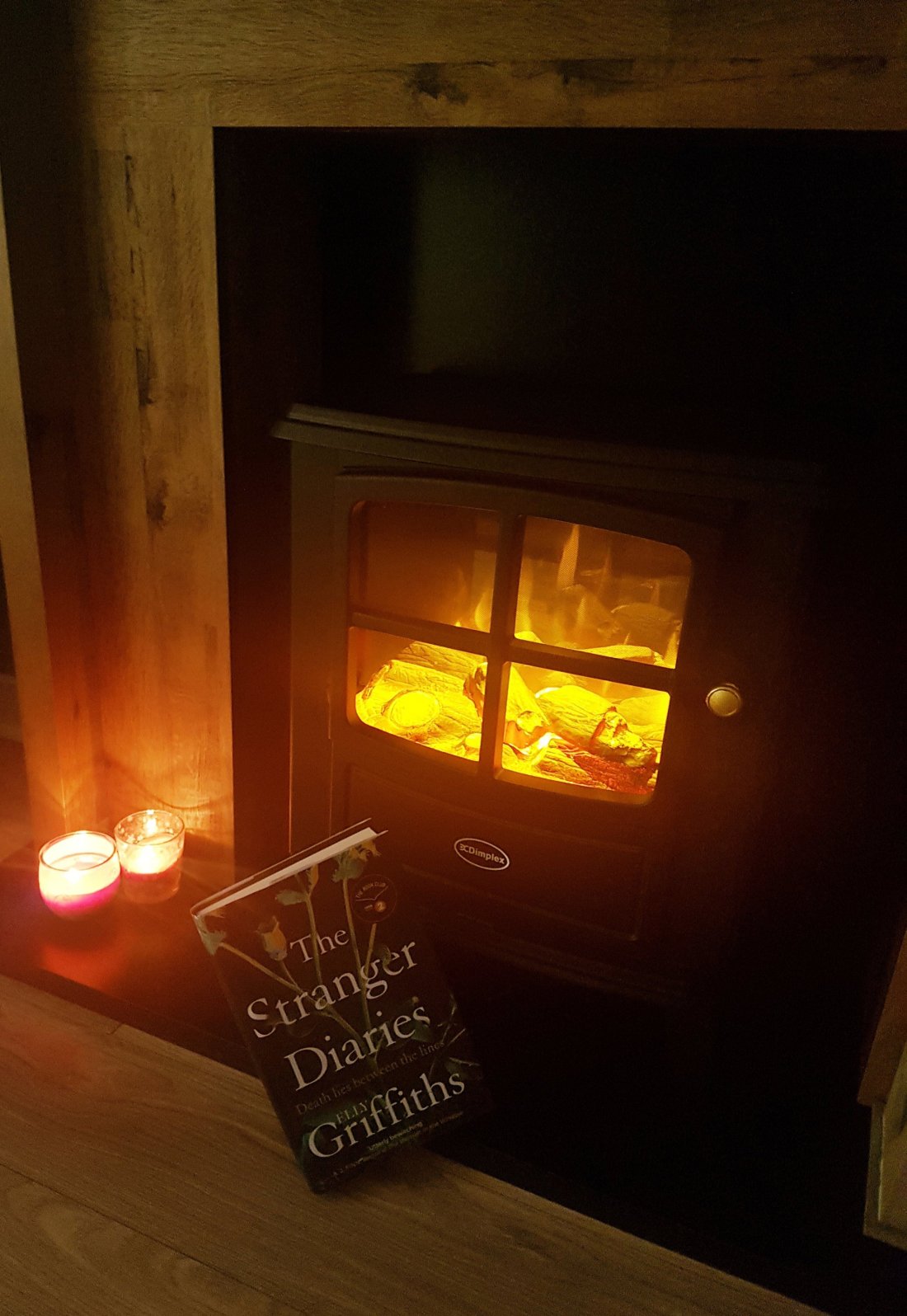
So, in the usual Clyde review style of not actually saying anything about the plot and focusing more on my various obsessions with the characters’ lives/generally wanting to be certain characters, The Stranger Diaries is an excellent standalone mystery read. As it is set around Halloween and has a lot to do with witches and the supernatural (as well as good old-fashioned murder), it would be the perfect read for a dark, October evening snuggled up by the fire with a hot drink. And there is also a cute dog, so if that doesn’t sway you then I don’t know what will.

Best enjoyed by a warm fire on a cold evening.

Childhood Literary Heroes

Like a lot of book lovers (and most daughters of English Literature teachers), my love of reading began very early in life. And after recently reading The Librarian, which follows a children’s librarian as she introduces sheltered village children to the exciting world of books, it got me thinking about the books I loved while growing up. However, listing all the books I loved as a child would take several days and spill over multiple posts (clearly I wasn’t a very social child), so instead I decided to pick out some key characters who became personal heroes because, realistically, you cannot have a great book if it doesn’t include great characters.

#1 – Pippi Longstocking

Okay so I’m cheating a little bit on this one because I never physically sat down and read any of this series, but I had the audio versions of all of them on cassette (showing my age slightly here), which I listened to until the tape wore out so the sound became grainy and the tape became knotted. I was in absolute awe of Pippi; how independent she is by living in her own house, as well as how confident and self assured she is in everything she does. I desperately wanted to live in my own house like her – I used to daydream about it all the time, to the point where I started using the decrepit, mouldy old Victorian outhouse of my parents’ home as my ‘house’, where I would sit and fantasise about what it would be like to sail the high seas with Pippi and her father.

All great book characters should be people we aspire to be like, and I wanted to be Pippi so much that I dressed up as her for three consecutive World Book Days – complete with pipe cleaners in my plaits and a soft monkey sewn to the shoulder of my dress. Her fierce courage, self confidence and independence is definitely something I hope has carried through to my adult life.

#2 Georgina Kirrin – The Famous Five

I adored Enid Blyton books when I was growing up: The Famous Five, Secret Seven, The Faraway Tree, Mallory Towers, The Twins at St Claire’s; if Blyton wrote it, then I was reading it. I personally think her work hasn’t aged at all, but in the age of iPads and Fortnite, it pains me to think that children probably don’t get gangs together and go around the countryside solving mysteries together any more. The youth of today, honestly.

George is a really interesting character to look back on, because from a 2019 perspective, there is clearly an underlying gender identity issue within her, which makes it incredibly relatable for today’s kids, but is ironic because I highly doubt Enid Blyton’s conservative 1940’s view would particularly match up with this. Nonetheless, as a total tomboy misfit myself, six or seven year old Esther really needed to know that it was okay to not be feminine all the time. I don’t know if it was life imitating art or vice versa, but my young self absolutely was the George of all my friendship groups – independent, bossy, a self-imposed ringleader with a fiery temper, but probably underneath quite insecure about herself and incredibly loyal to her friends. George’s relationship with Timmy the dog was also a key feature for me, because when I got my dog Tilly at eleven she became my most trusted friend, and still is to this day. I like to think Tilly is as loyal as Timmy and would defend me from rogue treasure hunters, but she is now thirteen and probably wouldn’t wake up from her nap long enough to notice, but in our youth we definitely made a great mystery-solving double act.

#3 – Tracy Beaker

‘Finally, an actual 1990’s reference which proves she didn’t grow up in the 1940’s’ I hear you cry. Yes, like all 90’s babies, I grew up totally obsessed with Jacqueline Wilson. I think I started reading Tracy Beaker a little bit younger than I should have, but my ignorance as to why she was in a children’s home and what social workers really were probably heightened my enjoyment of the story. As far as I was concerned, Tracy lived in a really fun boarding school like Mallory Towers, where there were no parents and the kids could run riot – my secure, middle-class upbringing seemed a bit rubbish in comparison really.

Obviously now I’m older I understand what the premise of the story was, and it was great to meet Tracy again last year when she returned in print for one last time as an adult. Jacqueline Wilson stories all featured some kind of trauma – poverty, abuse, addiction, bullying; maybe this is why my generation are in a mental health crisis and all seem to support left-wing politics. But, it’s hugely important to address these issues and make kids aware of the world in which they’re growing up – I went to a really deprived primary school and had no real understanding of what other kids were going through until I discovered Jacqueline Wilson. I digress, but Tracy was a relevant, present day version of Pippi Longstocking. Tracy was on her own – she had no allies, unlike George’s Famous Five, and she preferred it that way. Like most kids, I did have periods of my young life with few or no friends as a result of silly fall-outs, but whenever I found myself alone I would channel Tracy’s independence and bravery, and know that it would all work out okay in the end.

#4 Lyra Belacqua – His Dark Materials

I started reading His Dark Materials when I was about nine or ten, so a similar age to Lyra in Northern Lights. As with all the other characters in this list, her independence and courage is what initially hooked my attention, but unlike the others I don’t think I wanted to be Lyra so much as I wanted to be friends with her. Lyra and Roger’s friendship was something I really wanted to be a part of; although I did have my own friends I hadn’t experienced that kind of deep bond – probably because I didn’t live in a magical world where most of the adults were trying to kill me. But nevertheless, I wanted in.

I have never seen the film version which came out in my early teens, and I don’t have any desire to. It’s been so long since I read this trilogy that I struggle to remember the plot, but I didn’t want to see the film and have the version of the characters I have kept in my mind all these years, replaced by someone else’s interpretation. In short, I wanted to keep my Lyra and Roger for me. It’s crazy that I can’t really remember what happens in the books, but I remember Lyra, Roger, Lord Asriel and Mrs Coulter like they’re friends I’ve had for years. I still have a very clear image in my head of all four of them (especially Mrs Coulter who gave me nightmares), which to me is a sign of excellent writing.

#5 Matilda Wormwood

I am ashamed to confess – I saw the film version first. As a rule of thumb, I ALWAYS read the book first. But, Matilda was released in cinemas when I was two, so my family had it on video by the time I was three or four, and my sister and I watched it daily. I did go on to read the book, and all of the other Roald Dahl books – George’s Marvellous Medicine has to be my all time favourite, my sister and I used to make our own concoctions of it to try and make our parents grow bigger than the house. I watched Matilda again recently as an adult, and it has aged to perfection. All children feel at some stage like they don’t fit in with their family, and all younger siblings like myself can relate to feeling like the black sheep under the older one’s shadow for one reason or another. For some reason, I interpreted the story of Matilda as her gaining her super powers as a result of her reading so much at the library. And so began my ability to binge read books for hours on end – is reading something I enjoy, or is it an addiction I developed from a deep desire to gain super powers? Who will ever know? But I’m glad I became a reader nonetheless.

Although this is a post about my main literary heroes, I wouldn’t feel right mentioning Matilda without mentioning the secondary hero – Miss Honey. My reception teacher, whose name I won’t mention, was Miss Honey. Her name was different, she was from Liverpool and looked different, but I was utterly convinced, to the point where I used to call her Miss Honey and she would respond. I was already able to read before starting school (thanks to my older sister who somehow at eight years old managed to teach me), and this teacher saw my love of reading and nourished it into what it is today. She let me read through other lessons and break times – something you would never get away with now in the days of the National Curriculum, and I know teachers don’t have favourites but I like to think I was hers. I cried real tears, which came out in really loud ugly sobs on the last day of reception because she wasn’t my teacher any more. Perhaps the fact that I was the child who was crying about leaving school while all the other kids were bouncing off the walls to be free for the summer is the reason I had so few friends and spent my childhood immersed in books, but I digress. For various reasons which I won’t go into, our families stayed loosely in touch after this and I attended Miss Honey’s funeral when I was seventeen. I hadn’t spoken to her since I leaving infants’ school, but I don’t mind admitting that I was completely crushed to hear that she had died, and I remember looking at her photo on the coffin and feeling like no time had passed. Great teachers, like great books, stay with you for a lifetime – my love of Matilda, and consequential obsession with my Miss Honey, shaped my lifelong love of reading, which feels like a very fitting note on which to end this post.

Review – The Librarian (aka The Literary Equivalent of a Warm Hug)

I came across this book in mid-December on the recommendation of the Waterstone’s app (what a blessing and a curse that is), and although I read it quickly I wouldn’t say I devoured it in the way I binge-read quite a lot of books – it felt more like floating along the lazy river at Wet n Wild, it progressed quite quickly but I felt completely relaxed throughout the journey.

‘The Librarian’ follows Sylvia Blackwell as she moves to a remote country village in Wiltshire to work as a children’s librarian (the dream). It’s definitely a must-read for any lifelong bibliophile, with so many references to classic children’s books – as she guides the local children through the first steps of their reading journeys it feels like a walk down memory lane. Although it takes place in the 1950’s, Salley Vickers’ writing style is so compelling that the era becomes almost irrelevant, the characters are so well developed that this could take place in any time period and still work. I would say the main ‘plot’ focuses on Sylvia’s affair with a married GP, while at the same time trying to find her own way in her life away from her parental home, but this isn’t the sole focus of the book.

It sounds very negative to say this book is ‘plotless’, but it’s one of those great stories which doesn’t need a single focus point, it simply consists of great characters with rich histories in which you become really invested as they gently trundle along through life; and the reader knows that whatever the next chapter brings, they’ll enjoy it. Quite like The Breakfast Club, or Downton Abbey – with Downton there is an overall plot, but every time I sat down to watch it I didn’t feel the urgency of ‘I MUST KNOW WHAT HAPPENS NEXT’, it was rather more ‘whatever happens this week with these characters, it will keep me interested’. As with any good read, I definitely became invested in the characters, but Salley Vickers took this even further and by a couple of chapters in, I feltlike I was living vicariously through Sylvia Blackwell. Yes – my idea of living vicariously is by living in a cottage and working in a library, there is not one single hint of sarcasm in that. Picking up this book every evening after work felt like catching up with old friends, or relaxing into a warm bath on a cold, rainy night; and when a book can have that effect, who cares what the plot is?

My Year in Five Books

Somehow, despite seemingly never having time to do anything but go to work and plan a wedding, I have managed to read 45 books this year. 46 if I manage to finish the one I just started by midnight, which is entirely likely (I know how to party hard on NYE). So, when I thought about writing a summary of all the books I’ve read this year, on reflection it seems like that would be impossible to do without losing the reader’s interest. Instead, I’ve decided to pick out a few highlights from my year’s reads. Not all of them were released in 2018, some were just books which I happened to discover this year, but loved nonetheless. Here goes.

The Tenant of Wildfell Hall – Anne Bronte

Obviously this is not a 2018 release. If that is new information, you’re probably reading the wrong blog. Like most women, I read Jane Eyre in my late teens and absolutely loved it, but somehow managed to leave my Bronte interest there for a while. In May of this year, me and the other half took a romantic trip to Oxenhope, near Haworth. Yes, there was a bit of fantasy on my part of pretending to be Jane and Mr Rochester and a lot of time spent wishing I was wearing a bonnet, but I digress. After visiting the Parsonage (excellent day trip by the way, completely worth the travel if you’re a literature enthusiast), I picked up copies of The Tenant of Wildfell Hall and Wuthering Heights. The latter is neither here nor there for me, but that’s a post for another day. Anne is probably the least well known of the Bronte sisters, but I would go as far as saying that The Tenant of Wildfell Hall is even better than Jane Eyre. I’m fairly sure Anne Bronte had a time machine because this level of just pure feminist protest at the status of women in Victorian marriages is completely unheard of within this era. And even though its intention was to make a statement about the position of Victorian women, most of it is still very much applicable for today and the issues surrounding domestic violence and coercive control. I absolutely couldn’t put it down, and the role reversal of the desperate man chasing after the woman instead of the other way around is so refreshing, especially for books of this era.

My Mum Tracy Beaker – Jacqueline Wilson

I’ll not say too much on this one as it does already have its own post. However, stepping back into Tracy’s world was like going back to my childhood home and everything being in place as it was when I was ten years old – so comforting and nostalgic. Having said that, it is also a fantastic read in itself and being able to see how one of your favourite children’s literary heroes grew up is such a rare treat.

The Shipyard Girls series – Nancy Revell

Again, I won’t dwell on this one too much because the latest instalment has its own post already. It wasn’t until this year that I discovered this series, so I binge-read the first few back in April and became completely transfixed. Strong, independent women finding their way in times of complete adversity and turmoil, and charging through a male dominated environment with no fear – it’s just completely inspiring and, for me anyway, humbling to read about the amazing women who paved the way for the rest of us, especially in the North East which is an area usually not given any publicity unless it’s negative *cough* ‘Brexit’ *cough* ‘Sunderland Til I Die’.

Five Years from Now – Paige Toon

I had heard of Paige Toon years ago, but it wasn’t until this year that I actually sat down and read some of her work. This was the first one I tried, back in August, and I’ve only got two or three left now before I’ve read her entire back catalogue. So if that doesn’t say something about how good a writer she is, I don’t know what will. Five Years from Now is definitely my favourite Paige Toon book, which follows two people in five-year intervals who had a connection as children but end up being separated for a variety of reasons. As with all of her books, I laughed and cried in equal measure. Yes, actually cried. I shed proper tears over this book which dripped down my face – this wasn’t just a lump in the throat, oh no. The emotional attachment she made me have towards Nel and Vian was unlike any I’ve felt for any other characters, and given how much I read, that is quite an achievement. Again, as with the rest of her work, no loose end is left untied and the story comes full circle to a perfect ending which incorporates all the characters you meet throughout, leaving your heart full and your tissue box empty.

How to Be Famous – Caitlin Moran

Caitlin Moran is one of many authors my mam introduced me to when I was a teenager, and I would read her stance on anything. Seriously, she could produce a manual for NASA on rocket science, and it would still be hilarious. I loved its predecessor ‘How to Build a Girl’, so it was amazing to re visit Dolly Wilde (the person I really wanted to be, and sort of thought I was, as a teenager) and her crazy life in London following rock stars around. I particularly loved her corresponding column in defense of teenage groupies. As a former boy-obsessed wannabe teenage groupie, they are not given enough credit. How many rock bands would actually get off the ground if they didn’t have hoards of screaming, horny teenage girls chasing them around and trying to get onto the tour bus? Essentially, none. And the world would be deprived of good rock music, so really they provide a great public service and deserve this recognition, which has come in the form of our collective hero and representative – Dolly Wilde.

The ‘M’ Word

I always feel like I need to start my blog posts with some sort of justification as to why I’m talking about this particular topic ‘now’. I think it just provides a bit of context for the reader, but for this one I really have no reason as to why I felt like writing about it now – this is something that is in my head all the time. It has become a bit more prominent since I started planning my wedding, but really it’s something that’s always just ‘there’.

I lost my mam six years ago, when I was eighteen. I’d only turned eighteen a few weeks before actually, I had just finished my A Levels and had no idea where my life was going. And yes, it was horrendous. Or so I’m told it was, if I’m totally honest I think I’ve blocked most of it out without realising. People tell me things that I did or said around that time which I genuinely have no recollection of, it’s like I was under anesthetic and forgot it all as soon as I woke up. I still have no idea what happened in the 2012 Olympics which was going on at the time, even though I watched most of it.

“It will get easier” was very much the tag line of Summer 2012 for me, I heard it from everyone, and in hindsight I think it probably did. One memory I do have from that time was when I was at work, stood at the till waiting for a customer to need serving and looking out the window absent-mindedly, and I saw a family of presumably mum, dad, brother and the sister in her graduation outfit having coffee in the Costa opposite. I just became totally overcome with complete jealousy and anger. Although I was over the ‘worst’ of it – the funeral was done, we had got rid of most of her things that we didn’t need or want to keep, her bank accounts were closed and divided up and life was starting to settle in to a new ‘normal’, but the realisation that, whatever my graduation would turn out to be, it would never be that, absolutely broke me. In the end, I never attended my graduation for a lot of reasons, but the obvious mam-shaped hole that would be in every photograph was definitely a big factor.

I do sometimes regret not going to my graduation, and I always knew that if I got married I would be faced with the same dilemma. Initially, I never wanted to do the whole wedding gown, reception, photos and sit down meal palaver for the same reason, but ultimately reached the decision that even though my wedding and all the events leading up to it will never be what I wanted them to be, it’s stupid to spite myself of it altogether. But this is the thing that nobody ever warned me about. The initial shock of the immediate loss and my whole world changing is something that I was somewhat prepared for, but losing someone close to you is a life sentence. It’s a lifetime of frustration over something not being there when you wish it was, but also paradoxically of there being a big, fat elephant in the room that will not leave you alone. I never quite knew how to explain it to other people until I read Mara Wilson’s autobiography (yes, that girl from Matilda – it’s actually a great read I would strongly recommend it to anyone) and she hit the nail on the head:

“No one knows what to say to a child when a parent dies. In a best-case scenario, the child will know it’s okay for them to feel whatever they feel. But no one mentions how it will affect the rest of his or her life. No one told me I’d spend the rest of my life living with a ghost.”

That last sentence was, for me, like that moment when you finally understand a difficult maths problem in school. Suddenly, it all made sense. Sometimes it really feels like I have to live the rest of my life with my mam’s ghost stood next to me – people stare at it and you can see them wondering about it and wanting to ask, but never quite knowing how to phrase it. I’ve had multiple encounters of “and what’s your mam going to wear?”or “will your mam be getting her hair and make up done with you?” from totally innocent, well-meaning people throughout my wedding planning and I much prefer these interactions because then it gives me the window to explain. But when I went wedding dress and accessory shopping with my friends, a friend’s mam and one of my mam’s friends, I could tell people were wondering where my mam was in all of this. It happens every Christmas too, when the inevitable ‘and what are you doing on the day?’ questions start. Having to say ‘I’m cooking for me, my partner, my in-laws and my dad’ triggers a look of such bewilderment. It’s like having food stuck in your teeth after eating a really herby pasta – you’re not quite sure if the other person has noticed it, and the other person isn’t sure whether they want to make it uncomfortable by bringing it up.

Sadly, I don’t think there is ever going to be a resolution to this. Unless resurrection becomes possible, but even still I would then have to explain why she mysteriously disappeared for years, I’m going to have to spend my life being followed around by a shell of my mam and having to answer the awkward question of why I never seem to spend time with a mother. Hopefully, when I reach the age at which other people’s parents start to die off, there’ll be fewer questions. I think the main issue is me being twenty four and clearly not having a mother-daughter relationship of any kind which invites the curiosity. In summary, losing a parent too soon is absolutely awful, but the one thing I wish someone had prepared me for was the lifetime of awkward, sympathetic head tilts and confusion over why I appear to have a father but no mother. Whenever the topic does arise, it always seems to end up with me comforting the other person through their painful embarrassment at having triggered a conversation about death, an unpleasantness which Brits just don’t ever discuss. So if anyone knows of a polite way to say ‘no, my mother didn’t abandon me, she’s not in prison or on drugs she’s dead from a disease and not some dramatic suicide, and no don’t worry I’m not now going to break down in tears and make you feel uncomfortable’, then please let me know.

Christmas Reads

Somehow, December is upon us. I know, I can’t believe it either (and I have confirmed this shock with every shop assistant, colleague, friend and stranger with whom I have come into contact in the last 48 hours – ah, Britain). So between the general festivities, a very busy job and planning a wedding, both reading and blogging have taken quite a hard hit for me over the last few weeks. December is a bit effing stressful generally though, and finding that selfish time to lose yourself in a book seems to get moved further and further down the priority list. But, the beautiful thing about most Christmas books is that they’re shorter than the typical paperback (ah, those tight deadlines to get it on the shelves by October – must be a total nightmare for the authors but such a win for the reader), so even in the Christmas craziness there is still plenty of time to get through at least a couple. Plus, Christmas books are actually the only books I will actually read more than once, so if that doesn’t convince you to partake then I don’t know what will. But anyway, here’s a list of some of my favourites, in no particular order (cue dramatic X factor music).

Christmas With Billy and Me – Giovanna Fletcher
This was the first Christmas novella I came across which related to an existing book, and it was beyond thrilling being able to re visit characters I already knew and loved and see how they spent Christmas. Although it does work as a standalone book in that you can follow the story without knowing the background, I would say that you don’t get the full effect of the plot if you don’t have the back story. But, it’s the perfect length for a quick festive indulgence when you get a spare moment, and like all of Giovanna Fletcher’s characters you feel like you’ve known them for years after only a few pages. And who doesn’t love a heartwarming love story set in a rustic countryside cake shop, Christmas or not?

Dream a Little Christmas Dream – Giovanna Fletcher
Just like the former, it’s the literary equivalent of a beloved rom-com you find yourself re-watching each year – think Love Actually but not several hours long and without all the unpleasantness -throws a quick glance in Alan Rickman’s general direction-. Again, I loved this particularly because it’s a spin-off featuring characters I was already invested in, but it still hits the spot for a little injection of Christmas romance for unfamiliar readers.

A Christmas Carol – Charles Dickens
Honestly, if you don’t know the plot of this one then why are you even here? Obviously I knew what I was getting  myself in for when I first read this a few years ago, I was raised on the Patrick Stewart film adaptation every Christmas Eve on the BBC (but the Muppet version still takes the prize in my humble opinion). But, that didn’t make it any less enjoyable. I love Dickens and it’s a constant source of embarrassment that I haven’t read more of his work (reading leave from employment needs to be a thing, my to-read list just keeps growing), but everything of his that I have read I’ve become completely immersed in. When I read this for the first time I wasn’t picturing Richard E Grant trying to stand up to Patrick Stewart, or Miss Piggy scoffing the chestnuts before dinner was ready, I was visualising entirely different people because his descriptions just make your imagination go wild, but the magic of the story is retained nonetheless. I have only one problem with this story though, and I say it every year, but WHY DOES MARLEY’S GHOST TELL SCROOGE HE’LL HAVE A GHOST VISIT HIM EACH NIGHT AND THEN ALL THE GHOSTS COME AT ONCE? IT MAKES NO DIFFERENCE TO THE STORY SO WHY IS IT WRITTEN IN THERE?
Seriously, if someone knows the answer to that then PLEASE tell me and put my out of this annual misery.

Ruth’s First Christmas Tree – Elly Griffiths
I want to be Ruth Galloway, I’ll just get that out of the way first. It’s ridiculous that I haven’t given this series its own post yet, but that will definitely come with time. This installment is quite lesser known even by existing fans, I’m pretty sure it’s only available as an e-book, but it’s very unique in that while it does work as a standalone story, at the same time it doesn’t drastically move the overall series’ plot forward to make things tricky for readers who missed this one. That’s a difficult task to master when there are already so many established characters and sub plots in the saga so far, so well done to Elly Griffiths on that one. If you ask me, all established sagas need a short Christmas story somewhere in there because there is something magical about revisiting your old friends (fictional characters who I see as my friends) at Christmas time. And what’s not to love about Ruth’s cosy cottage on the breathtaking Norfolk coastline in the winter? Honestly, the image I have in my head of her house since this book has been of Kate Winslet’s house in The Holiday, and if that’s wrong, then I don’t want to be right.

A Family For Christmas – Helen Scott Taylor
I came across this as an e-book a few years ago when I was looking specifically for a festive book to enjoy over the Christmas period, and I was not disappointed. I must confess I haven’t read anything else by this author, I have no idea whether she’s even written anything else, which is really shameful considering how much I love this book. It ticks all the boxes for the perfect festive story: a career woman who wasn’t looking for love until she found it, a widower not realising he’s ready to love again, a cute child, a quintessentially English country cottage in the snow, some sheep, you get the idea. In a nutshell, it’s heartwarming without being corny, but for some reason is not very well known – which is a bit of an injustice if you ask me.

One Perfect Christmas (and other short stories) – Paige Toon
Confession time – I bought this book three days ago and haven’t had a chance to read it yet. However, I love Paige Toon and have never not been totally overtaken by the story when reading one of her books so I have no doubt that this collection of short stories will be anything shy of their full length counterparts. Again, I just love the idea of being able to revisit your already beloved characters and see how they’re doing at Christmas. It’s like the literary equivalent of the Friends Christmas specials.

If you haven’t guessed already by this point, I LOVE a Christmas novella from an existing saga. When I rise to power, all sagas will have Christmas editions at regular intervals. Even the ones that have no real influence within the overall plot are so special, and they must be so fun to write by just having free reign to let your characters enjoy Christmas without worrying where the plot is going or whether you’ve tied up all the loose ends. Well, if anyone wants to hire me as a freelance Christmas spin-off writer for their existing sagas then please let me know. That is definitely my dream job right there.

Review – Belle of the Back Streets

This week I found myself with three days off work (bliss) so, what did I do in that time? Get ahead with wedding planning? Finally redecorate the living room? Work out? Well, I sent one email to a photographer and repainted one wall of the living room, which in itself made me get a sweat on so *technically* I did do all three, but obviously not before binge reading a great new book.

Belle of the Back Streets is Glenda Young’s debut novel which only just came out I believe last week, but don’t cite me as a reliable source there. I’ll admit I hadn’t heard of Glenda Young or read any of her work until I saw some buzz about this novel on Twitter, buzz which came from Nancy Revell and anyone who has read my previous post will know that I pretty much live and breathe for her Shipyard Girls saga. Slight exaggeration, but it is really good, so obviously this was an endorsement I felt I could trust.

So, I went into Belle of the Back Streets with admittedly very high expectations, and I was certainly not disappointed. The story takes place in Sunderland in 1919, an era which doesn’t get a lot of coverage I think (usually it’s one of the World Wars or the Tudors when it comes to historical fiction), so my interest was piqued immediately, along with the fact that Meg ends up working as a rag and bone man (or girl, I suppose) – something which I knew very little about, but is basically the 20th Century version of Houghton’s scrap men.

But, of course, none of us are reading fiction books for a history lesson. Even if you come for the historical learning curve, Glenda Young makes sure you stay for the character development and overall suspense. I was almost late for an appointment during the baby stealing fiasco, and I pride myself on working out plot twists really easily but I will hold my hands up and admit that after the ‘bad woman’ was foreshadowed, I was blown away when it became apparent who that was going to be. As I’ve said before of my beloved Shipyard Girls, Meg has been added to the list of book characters that I wish I was friends with. She is so fiercely independent and driven but at the same time kind, loving and a bit vulnerable that I had to stop myself from fist pumping every time she triumphed.

And what is a women’s fiction novel without a dreamy man to fantasize over? Sorry Feminism, I am still very much in your club and firmly believe that Meg took care of her own damn self – triumphing at the end because of her own pure resilience and determination – but Adam is an absolute hunk. I loved Adam from the first time he’s introduced to us, despite the presence of the smelly netty during this otherwise very romantic meet cute, and had my fingers crossed through every page turn that Meg would come to her senses and just bloody well kiss him. Don’t get me wrong however, this isn’t some ridiculous Wuthering Heights damsel in distress being saved by the man rubbish – Adam is only rewarded with hubby status once Meg has won all her personal battles and it is made abundantly clear that she does. not. need. him. As annoyed as I was that she rejected his first marriage proposal, once I finished the book I realised what Glenda Young was doing – Meg does not need to be rescued and that is why she is a fantastic protagonist that you root for from page one. Historical fiction with fierce feminist undertones that make me want to yell YESSSS QUEEN from Ryhope cliffs is the only kind of historical fiction worth reading, in my humble opinion.

In case it isn’t abundantly clear by this point, I absolutely loved Belle of the Back Streets and will certainly be pre-ordering Glenda Young’s next masterpiece. Every plot point is tied up and concluded perfectly, the characters have so much depth that you get completely sucked into their individual worlds and it is an emotional rollercoaster which takes you through fear, anger, anticipation, laughter, pure joy and everything in between. Plus, there are animals in there too and what’s not to love about canine and equine side kicks? There was a brief moment where I really thought she had sent Stella to the knacker’s yard though, and if you had let that happen Ms Young, well there’s a small chance I would have been outside your house with a pitchfork. Kidding. A little bit. Hashtag ‘Justice For Stella’.

I definitely didn’t cry at the end though, I just had a bit of Dorito crumb in my eye…

Review – Into The Water

I’ll start this one off by making something clear – I enjoyed this book and I think Paula Hawkins is very talented. But, having said that, I do feel a bit sorry for her as an author. I imagine she feels like Hugh Grant’s dad in About a Boy, who wrote that really successful song and spent the rest of his life trying to top its success with a better one. It’s like when Nirvana stopped playing Smells Like Teen Spirit, but some of us like Smells Like Teen Spirit and unfortunately, it’s the general consensus that it is their best song.

Personally, I thought Girl on the Train was amazing. I know a few clever cloggs managed to figure out the twist before the end but sorry, I wasn’t one of you. I liked Girl on the Train so much that I wish I hadn’t already read it, just so I can have that experience of reading it for the first time all over again.  This, I think, is the sole reason that I finished Into the Water by feeling a little bit…flat.

Into the Water follows quite a similar formula to Girl on the Train, in that it is told by different people’s perspectives and the reader has to piece all of this together to follow the story – and I do think this is a great way of building the suspense and keeping the reader’s interest. However, Into the Water it told by about six different perspectives, and that of some additional quite minor characters, so I must admit I spent the first two thirds of the book referring back to the ‘who’s who’ guide which sits before the prologue. Sorry, but if your reader is still doing this two thirds in, there are simply too many main characters to keep track of. Each character, no matter how minor, had a rich history to them, which in itself is absolutely not a bad thing (quite the opposite), but when you have so many main characters there just is not room for such depth to each one and it starts to weigh quite heavily on the reader’s head. The plot had more complexities than Girl on the Train as well, because it includes flashbacks to completely different eras as well as different characters’ past experiences, so it was just a bit too much to follow.

The plot itself was great, a lot of things happened early on that made me think ‘no way is this going to be made relevant at the end, there’s no chance that all of these pieces are going to come together’, but they did. Paula Hawkins would not get seven years of bad luck if she dropped a mirror because she’d piece that glass back together perfectly in less than an hour – I have no doubt about that. I do however feel that there wasn’t a need for some of the sub plots, for example I don’t think Helen needed so much of a role in the story, and the whole conflict between Nell and Jude didn’t feel that relevant to the overall mystery. It felt to me like their conflict was there to justify Robbie’s place in the story, and he seemed to exist only as a means of throwing the reader off the scent of the actual killer – much like the therapist in Girl on the Train. But, having read Girl on the Train first, I was too familiar with Paula Hawkins’ mind games. So, even though on paper Robbie seemed like the obvious culprit, I knew that the obvious one would turn out to be totally irrelevant in the end, and he only seemed to feature a couple of times in the story. My logic was that if he was in any way important to the ending, he would be featured in it far more than he actually is, so when Jules went to the garage to challenge him over his involvement, the tension just wasn’t there for me.

On the whole I did enjoy Into the Water, but it followed the typical plot of this genre so personally I found the twist very easy to guess and the mystery very easy to solve. But, the success of Girl on the Train must have created immense pressure for the author, and it definitely wouldn’t put me off reading anything she publishes in the future. Even though you know what’s coming, Hawkins’ ability to draw the reader in and make you see, smell, hear and feel the surroundings that the character does means I will still be spending many a Sunday afternoon getting lost in her characters’ worlds, as long as she keeps creating them.