Christmas Reads

Somehow, December is upon us. I know, I can’t believe it either (and I have confirmed this shock with every shop assistant, colleague, friend and stranger with whom I have come into contact in the last 48 hours – ah, Britain). So between the general festivities, a very busy job and planning a wedding, both reading and blogging have taken quite a hard hit for me over the last few weeks. December is a bit effing stressful generally though, and finding that selfish time to lose yourself in a book seems to get moved further and further down the priority list. But, the beautiful thing about most Christmas books is that they’re shorter than the typical paperback (ah, those tight deadlines to get it on the shelves by October – must be a total nightmare for the authors but such a win for the reader), so even in the Christmas craziness there is still plenty of time to get through at least a couple. Plus, Christmas books are actually the only books I will actually read more than once, so if that doesn’t convince you to partake then I don’t know what will. But anyway, here’s a list of some of my favourites, in no particular order (cue dramatic X factor music).

Christmas With Billy and Me – Giovanna Fletcher
This was the first Christmas novella I came across which related to an existing book, and it was beyond thrilling being able to re visit characters I already knew and loved and see how they spent Christmas. Although it does work as a standalone book in that you can follow the story without knowing the background, I would say that you don’t get the full effect of the plot if you don’t have the back story. But, it’s the perfect length for a quick festive indulgence when you get a spare moment, and like all of Giovanna Fletcher’s characters you feel like you’ve known them for years after only a few pages. And who doesn’t love a heartwarming love story set in a rustic countryside cake shop, Christmas or not?

Dream a Little Christmas Dream – Giovanna Fletcher
Just like the former, it’s the literary equivalent of a beloved rom-com you find yourself re-watching each year – think Love Actually but not several hours long and without all the unpleasantness -throws a quick glance in Alan Rickman’s general direction-. Again, I loved this particularly because it’s a spin-off featuring characters I was already invested in, but it still hits the spot for a little injection of Christmas romance for unfamiliar readers.

A Christmas Carol – Charles Dickens
Honestly, if you don’t know the plot of this one then why are you even here? Obviously I knew what I was getting  myself in for when I first read this a few years ago, I was raised on the Patrick Stewart film adaptation every Christmas Eve on the BBC (but the Muppet version still takes the prize in my humble opinion). But, that didn’t make it any less enjoyable. I love Dickens and it’s a constant source of embarrassment that I haven’t read more of his work (reading leave from employment needs to be a thing, my to-read list just keeps growing), but everything of his that I have read I’ve become completely immersed in. When I read this for the first time I wasn’t picturing Richard E Grant trying to stand up to Patrick Stewart, or Miss Piggy scoffing the chestnuts before dinner was ready, I was visualising entirely different people because his descriptions just make your imagination go wild, but the magic of the story is retained nonetheless. I have only one problem with this story though, and I say it every year, but WHY DOES MARLEY’S GHOST TELL SCROOGE HE’LL HAVE A GHOST VISIT HIM EACH NIGHT AND THEN ALL THE GHOSTS COME AT ONCE? IT MAKES NO DIFFERENCE TO THE STORY SO WHY IS IT WRITTEN IN THERE?
Seriously, if someone knows the answer to that then PLEASE tell me and put my out of this annual misery.

Ruth’s First Christmas Tree – Elly Griffiths
I want to be Ruth Galloway, I’ll just get that out of the way first. It’s ridiculous that I haven’t given this series its own post yet, but that will definitely come with time. This installment is quite lesser known even by existing fans, I’m pretty sure it’s only available as an e-book, but it’s very unique in that while it does work as a standalone story, at the same time it doesn’t drastically move the overall series’ plot forward to make things tricky for readers who missed this one. That’s a difficult task to master when there are already so many established characters and sub plots in the saga so far, so well done to Elly Griffiths on that one. If you ask me, all established sagas need a short Christmas story somewhere in there because there is something magical about revisiting your old friends (fictional characters who I see as my friends) at Christmas time. And what’s not to love about Ruth’s cosy cottage on the breathtaking Norfolk coastline in the winter? Honestly, the image I have in my head of her house since this book has been of Kate Winslet’s house in The Holiday, and if that’s wrong, then I don’t want to be right.

A Family For Christmas – Helen Scott Taylor
I came across this as an e-book a few years ago when I was looking specifically for a festive book to enjoy over the Christmas period, and I was not disappointed. I must confess I haven’t read anything else by this author, I have no idea whether she’s even written anything else, which is really shameful considering how much I love this book. It ticks all the boxes for the perfect festive story: a career woman who wasn’t looking for love until she found it, a widower not realising he’s ready to love again, a cute child, a quintessentially English country cottage in the snow, some sheep, you get the idea. In a nutshell, it’s heartwarming without being corny, but for some reason is not very well known – which is a bit of an injustice if you ask me.

One Perfect Christmas (and other short stories) – Paige Toon
Confession time – I bought this book three days ago and haven’t had a chance to read it yet. However, I love Paige Toon and have never not been totally overtaken by the story when reading one of her books so I have no doubt that this collection of short stories will be anything shy of their full length counterparts. Again, I just love the idea of being able to revisit your already beloved characters and see how they’re doing at Christmas. It’s like the literary equivalent of the Friends Christmas specials.

If you haven’t guessed already by this point, I LOVE a Christmas novella from an existing saga. When I rise to power, all sagas will have Christmas editions at regular intervals. Even the ones that have no real influence within the overall plot are so special, and they must be so fun to write by just having free reign to let your characters enjoy Christmas without worrying where the plot is going or whether you’ve tied up all the loose ends. Well, if anyone wants to hire me as a freelance Christmas spin-off writer for their existing sagas then please let me know. That is definitely my dream job right there.

Review – Belle of the Back Streets

This week I found myself with three days off work (bliss) so, what did I do in that time? Get ahead with wedding planning? Finally redecorate the living room? Work out? Well, I sent one email to a photographer and repainted one wall of the living room, which in itself made me get a sweat on so *technically* I did do all three, but obviously not before binge reading a great new book.

Belle of the Back Streets is Glenda Young’s debut novel which only just came out I believe last week, but don’t cite me as a reliable source there. I’ll admit I hadn’t heard of Glenda Young or read any of her work until I saw some buzz about this novel on Twitter, buzz which came from Nancy Revell and anyone who has read my previous post will know that I pretty much live and breathe for her Shipyard Girls saga. Slight exaggeration, but it is really good, so obviously this was an endorsement I felt I could trust.

So, I went into Belle of the Back Streets with admittedly very high expectations, and I was certainly not disappointed. The story takes place in Sunderland in 1919, an era which doesn’t get a lot of coverage I think (usually it’s one of the World Wars or the Tudors when it comes to historical fiction), so my interest was piqued immediately, along with the fact that Meg ends up working as a rag and bone man (or girl, I suppose) – something which I knew very little about, but is basically the 20th Century version of Houghton’s scrap men.

But, of course, none of us are reading fiction books for a history lesson. Even if you come for the historical learning curve, Glenda Young makes sure you stay for the character development and overall suspense. I was almost late for an appointment during the baby stealing fiasco, and I pride myself on working out plot twists really easily but I will hold my hands up and admit that after the ‘bad woman’ was foreshadowed, I was blown away when it became apparent who that was going to be. As I’ve said before of my beloved Shipyard Girls, Meg has been added to the list of book characters that I wish I was friends with. She is so fiercely independent and driven but at the same time kind, loving and a bit vulnerable that I had to stop myself from fist pumping every time she triumphed.

And what is a women’s fiction novel without a dreamy man to fantasize over? Sorry Feminism, I am still very much in your club and firmly believe that Meg took care of her own damn self – triumphing at the end because of her own pure resilience and determination – but Adam is an absolute hunk. I loved Adam from the first time he’s introduced to us, despite the presence of the smelly netty during this otherwise very romantic meet cute, and had my fingers crossed through every page turn that Meg would come to her senses and just bloody well kiss him. Don’t get me wrong however, this isn’t some ridiculous Wuthering Heights damsel in distress being saved by the man rubbish – Adam is only rewarded with hubby status once Meg has won all her personal battles and it is made abundantly clear that she does. not. need. him. As annoyed as I was that she rejected his first marriage proposal, once I finished the book I realised what Glenda Young was doing – Meg does not need to be rescued and that is why she is a fantastic protagonist that you root for from page one. Historical fiction with fierce feminist undertones that make me want to yell YESSSS QUEEN from Ryhope cliffs is the only kind of historical fiction worth reading, in my humble opinion.

In case it isn’t abundantly clear by this point, I absolutely loved Belle of the Back Streets and will certainly be pre-ordering Glenda Young’s next masterpiece. Every plot point is tied up and concluded perfectly, the characters have so much depth that you get completely sucked into their individual worlds and it is an emotional rollercoaster which takes you through fear, anger, anticipation, laughter, pure joy and everything in between. Plus, there are animals in there too and what’s not to love about canine and equine side kicks? There was a brief moment where I really thought she had sent Stella to the knacker’s yard though, and if you had let that happen Ms Young, well there’s a small chance I would have been outside your house with a pitchfork. Kidding. A little bit. Hashtag ‘Justice For Stella’.

I definitely didn’t cry at the end though, I just had a bit of Dorito crumb in my eye…

Review – Into The Water

I’ll start this one off by making something clear – I enjoyed this book and I think Paula Hawkins is very talented. But, having said that, I do feel a bit sorry for her as an author. I imagine she feels like Hugh Grant’s dad in About a Boy, who wrote that really successful song and spent the rest of his life trying to top its success with a better one. It’s like when Nirvana stopped playing Smells Like Teen Spirit, but some of us like Smells Like Teen Spirit and unfortunately, it’s the general consensus that it is their best song.

Personally, I thought Girl on the Train was amazing. I know a few clever cloggs managed to figure out the twist before the end but sorry, I wasn’t one of you. I liked Girl on the Train so much that I wish I hadn’t already read it, just so I can have that experience of reading it for the first time all over again.  This, I think, is the sole reason that I finished Into the Water by feeling a little bit…flat.

Into the Water follows quite a similar formula to Girl on the Train, in that it is told by different people’s perspectives and the reader has to piece all of this together to follow the story – and I do think this is a great way of building the suspense and keeping the reader’s interest. However, Into the Water it told by about six different perspectives, and that of some additional quite minor characters, so I must admit I spent the first two thirds of the book referring back to the ‘who’s who’ guide which sits before the prologue. Sorry, but if your reader is still doing this two thirds in, there are simply too many main characters to keep track of. Each character, no matter how minor, had a rich history to them, which in itself is absolutely not a bad thing (quite the opposite), but when you have so many main characters there just is not room for such depth to each one and it starts to weigh quite heavily on the reader’s head. The plot had more complexities than Girl on the Train as well, because it includes flashbacks to completely different eras as well as different characters’ past experiences, so it was just a bit too much to follow.

The plot itself was great, a lot of things happened early on that made me think ‘no way is this going to be made relevant at the end, there’s no chance that all of these pieces are going to come together’, but they did. Paula Hawkins would not get seven years of bad luck if she dropped a mirror because she’d piece that glass back together perfectly in less than an hour – I have no doubt about that. I do however feel that there wasn’t a need for some of the sub plots, for example I don’t think Helen needed so much of a role in the story, and the whole conflict between Nell and Jude didn’t feel that relevant to the overall mystery. It felt to me like their conflict was there to justify Robbie’s place in the story, and he seemed to exist only as a means of throwing the reader off the scent of the actual killer – much like the therapist in Girl on the Train. But, having read Girl on the Train first, I was too familiar with Paula Hawkins’ mind games. So, even though on paper Robbie seemed like the obvious culprit, I knew that the obvious one would turn out to be totally irrelevant in the end, and he only seemed to feature a couple of times in the story. My logic was that if he was in any way important to the ending, he would be featured in it far more than he actually is, so when Jules went to the garage to challenge him over his involvement, the tension just wasn’t there for me.

On the whole I did enjoy Into the Water, but it followed the typical plot of this genre so personally I found the twist very easy to guess and the mystery very easy to solve. But, the success of Girl on the Train must have created immense pressure for the author, and it definitely wouldn’t put me off reading anything she publishes in the future. Even though you know what’s coming, Hawkins’ ability to draw the reader in and make you see, smell, hear and feel the surroundings that the character does means I will still be spending many a Sunday afternoon getting lost in her characters’ worlds, as long as she keeps creating them.

Review – My Mum Tracy Beaker

Like all Millennials, particularly those like me who didn’t tend to get out much, I grew up reading Jacqueline Wilson’s eclectic oeuvre of tragically depressing yet addictive stories about kids on the fringes of society. Maybe this is why our generation grew up to love Corbyn so much? That is definitely something that needs to be explored. But I digress. So yes, here I was, twenty four and way too old to be reading books with illustrations, but the announcement that there was going to be a new Tracy Beaker story immediately reverted me back to being ten years old and immersing myself in a great book for hours on end without the guilt of ‘I really should hoover today’ or ‘I should probably use this time to go to the gym’. Ah, youth.

As is the case with many sequels, this excitement also came with a degree of apprehension. ‘The Story of Tracy Beaker’, ‘The Dare Game’ and ‘Starring Tracy Beaker’ were all released in a moderately paced succession, but it’s been twelve years since we last checked in with Tracy and Cam and, frankly, I was a bit worried that this one was going to feel forced and ruin the magic of the first three; but for the first time in recorded history – I was wrong.

We first  meet grown-up Tracy through the eyes of her daughter Jess Beaker, who has all of Tracy’s well-hidden good qualities – she’s thoughtful and puts everyone else’s needs before her own, which I think Tracy does deep down but it’s usually masked by her harsh outer shell. Jess is how I imagine the love child of Tracy and Peter Ingham would be, and given how this installment ends, that may well become a reality if there is a further book…

Tracy thankfully hasn’t lost her feisty streak – even as a mother she still hates authority, shouts at teachers and flies completely off the handle whenever she sees red. Having said that, she is fiercely protective of her daughter and very aware of how Carly treated her so she steers vigorously away from that cycle for Jess which adds so much depth to Tracy’s character and reminds you that her vulnerability is still there beneath the angst.

Tracy then falls head over heels for a boy (I know, ick!), and is convinced this is her ticket to the life she always dreamed her mum would give her with fame, fortune and even the pink Cadillac she’s dreamed of since book one. Nice touch there, Ms Wilson! I had reservations about the idea of Tracy being all loved up with a boyfriend, it just didn’t seem realistic to me and I went into this book with great cynicism towards that. However, trying not to reveal too many spoilers here, the boyfriend she has is actually a character we’ve met before – one I always thought there was something a little bit ‘off’ about when we first met him in ‘The Dare Game’. Throughout their relationship, Tracy’s guard is gradually let down and it was so endearing to see that side of her in such a big dose. It seemed like as she’s become an adult Tracy started to lose that sixth sense she always seemed to have about people’s character and her ability to spot a potential baddie within seconds, but thankfully, this is a quality she passed on to Jess – who is not so easily fooled.

Although this book would still be a great read as a standalone, it’s far more special for readers who are familiar with Tracy’s journey as all the previous significant characters make a return either directly or by reference from Tracy or another principal character. And the return of the Mickey Mouse alarm clock was just a nostalgia overdose for me, along with the several other subtle nods to Tracy’s formative yeas.

Naturally Cam is still here as the port of sensibleness in Tracy’s chaotic life, and her relationship with Jess is absolutely perfect and so touching to read. Cam actually has a more significant role in this installment, and becomes more of a character in herself rather than being formed through Tracy’s eyes from the pedestal on which she placed Cam after their first meeting; and her role is a really important consistency for the readers who have followed Tracy’s story from the start. Having Tracy transition into an adult without anyone from her younger years staying in her life wouldn’t really have worked, and also it would be difficult for fans of the series to believe that Cam wouldn’t have remained a part of Tracy’s story. There are some interesting developments with Cam’s character as well, and one pretty big one which is quite amusing as it is discovered through Jess’ observations, but Jess is a bit too naive to understand quite what this storyline implies. This part actually made me really want to go back and re-read the first three, in case this was implied earlier and I just didn’t pick up on it because I, too, was naive when I first read them.

As with all the classic Jacqueline Wilson books, the darker themes like poverty, bullying and to an extent domestic violence were still very prominent, but are narrated through Jess’ innocent perspective so it is somewhat softened and doesn’t feel like a really depressing, gloomy story. And, as ever, you’re still always rooting for Tracy to come out on top even when she is making some monumental mistakes. But of course, as she always does, Tracy comes out on top in the end despite all the struggles, and I love her even more for it. As much as I would love this series to go on and on because Tracy Beaker feels like an old friend with whom I grew up, the ending of this book is so fitting and satisfying that I don’t know where another one could feasibly go – thought I’m sure if anyone can manage it it’s Jacqueline Wilson. Tracy’s reunion with Peter really signified to me that she has come full circle and done the growing up that she needed to in order to appreciate him for the friend he always tried to be for her; and, wherever that relationship goes, it remains a perfect end point for Tracy and Jess’ journey. Plus, it is always nice to leave the door open for readers to make up their own mind about what Tracy might do next.


Finding My Other Mothership

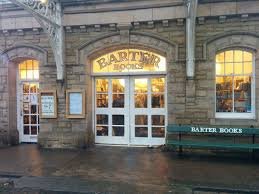
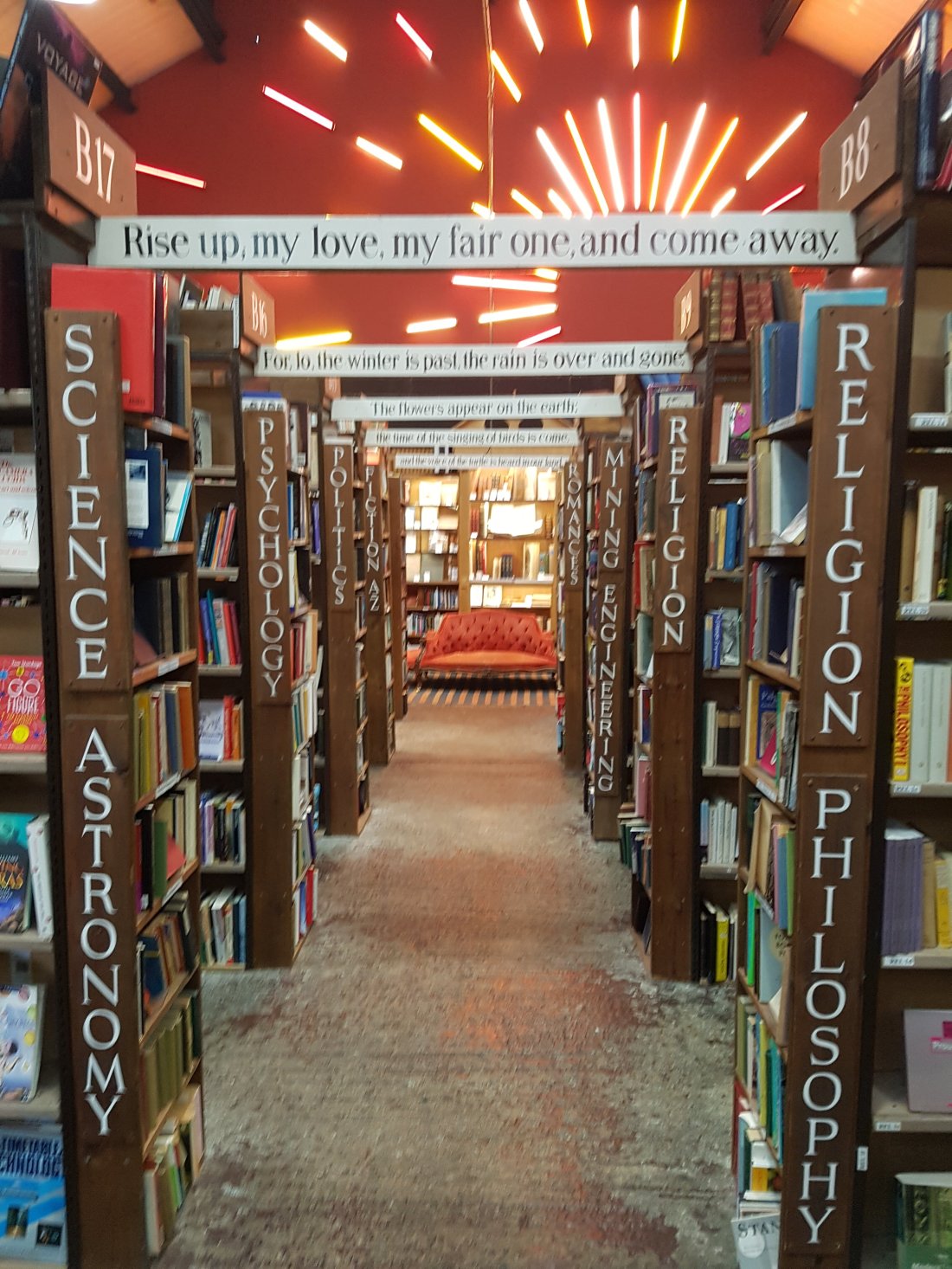
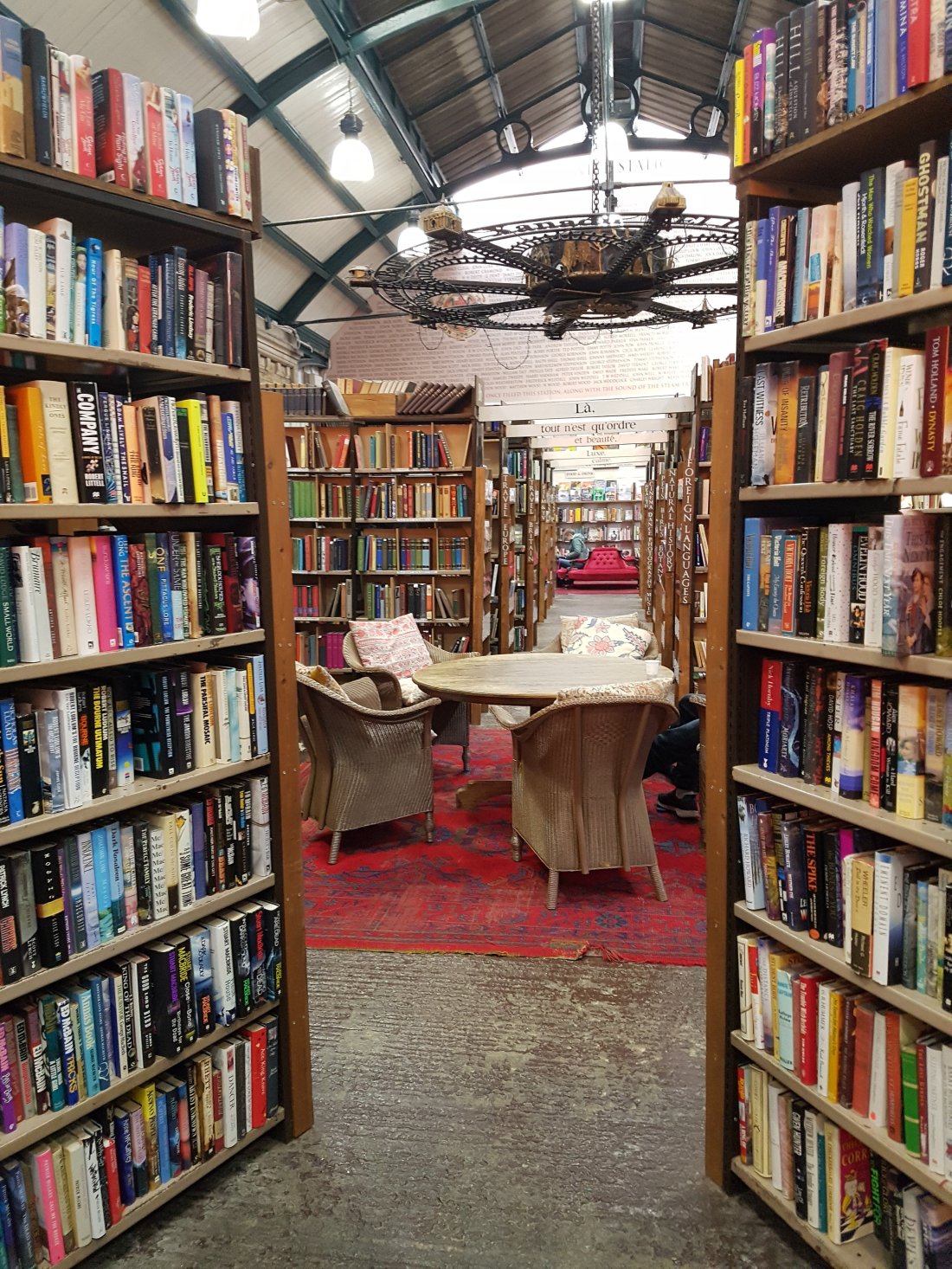
If you’ve already read my last post, you’ll be aware that a trip to Barter Books was probably not the most exciting thing I did last Saturday, but it definitely came a close second. I’ve loved Barter Books since I was little, and I’m old enough to remember when there was also a branch in Seahouses (yes, that was a thing, my parents actually know the people who used to run it so that is a verifiable fact), so it wasn’t a new or particularly novel – no pun intended – experience going there last week, but that absolutely didn’t make it any less enjoyable.

I’ve written before about using libraries, and how being able to roam freely to lose yourself in new characters and adventures with no cost incurred is just so incredible for a bookworm like myself, and definitely something that people generally don’t take enough advantage of; and the same applies for Barter Books, or secondhand bookshops generally. It’s so thrilling to be able to rake through the shelves with no idea what you might find, it’s like going treasure hunting without running the risk of accidentally touching a worm.

No disrespect to Waterstone’s, I’m still a loyal member of their rewards club, but you know what you’re going to find when you go in there; even if you leave it a few months or even a year between visits, the same authors tend to feature on the ‘buy one get one half price’ stands, and the same genres are in the featured positions on the shelves. With a second hand bookshop, that’s different no matter how often you go in because they get a constant churn of new, pre-loved stock. The sad thing about high street bookshops is that, unless a novel is a ‘classic’ or the author recently published something new and they’re trying to re-promote their previous work, books have a very limited shelf life. After a few months, sometimes even weeks, they get demoted to the general A-Z fiction section, where they go to die. I know that if there’s something you particularly want there’s always a keen, helpful bookseller at hand to order it for you and make other recommendations, but personally I don’t always know what I like until I see it in front of me. If I want something entirely new and undiscovered to read then I need to rake, and if the next ‘right’ book for me to immerse myself in is over a year old then, sorry, but I’m unlikely to find it on the high street.

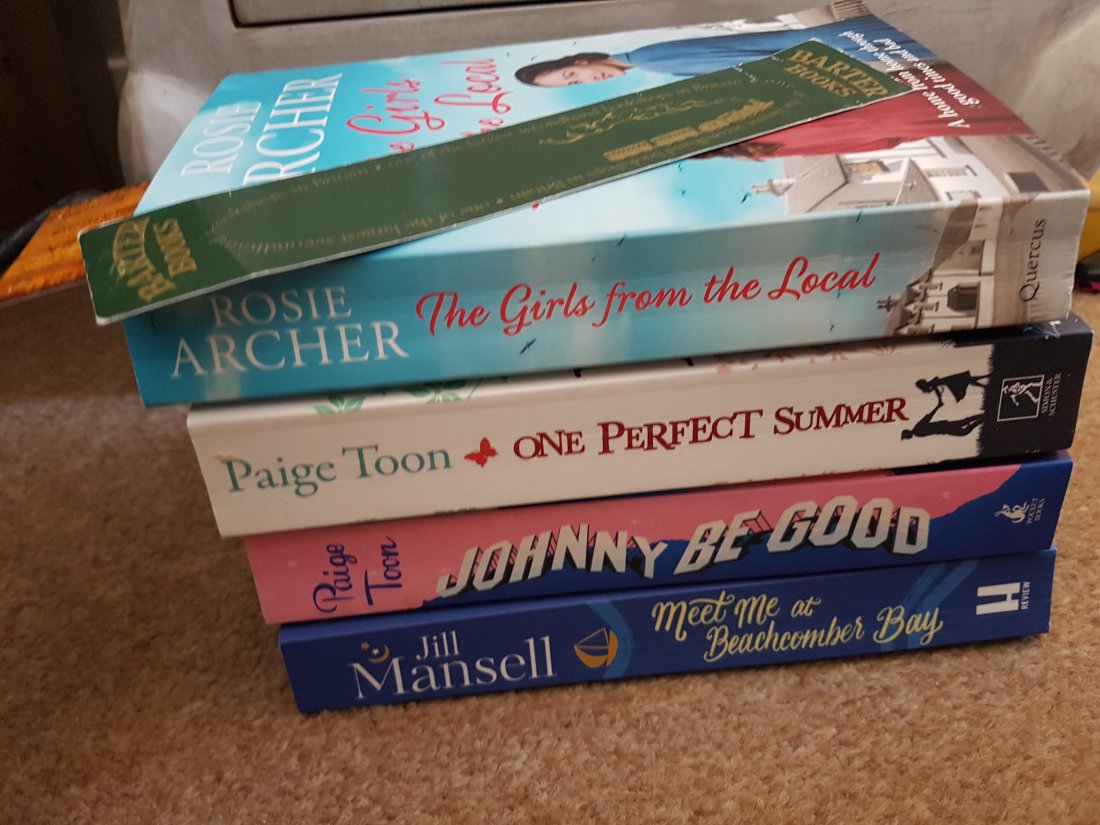
I tweeted recently about how to spot a great library book, as I’d just checked out a book where the date label was almost totally covered in date stamps – a sign that it had been loved more times than Stormy Daniels (I am absolutely not one to condone slut shaming, but you get the point I’m making). A similar technique applies when in a second hand bookshop, the more battered the cover, the more creases in the spine, the more likely it is to pique my interest. No, we should not judge a book by its cover inherently, but if said cover implies that the book has been read and re-read multiple times, then it’s definitely worth a look over the blurb at least. And if that hasn’t persuaded you already, just think of the savings. Last week I got four fairly recent paperbacks for less than £10, rather than the usual £7.99 each, just because someone else has cracked the spine first. I can’t speak for other secondhand bookshops, but Barter Books has a system where you get credit for bringing used books in, which you can spend on new ones, so if you’re a book junkie like me this is a much safer way to enjoy your habit and soften the guilt of parting with your old books – I’m fairly sure my parents have never actually used cash in that shop. And if nothing else, they have free tea and coffee, a warm fire and a range of other customers’ dogs to pet.

Finding My Mothership, aka the Library

If you’re already a visitor to this blog, big up to both of you by the way, I will build a good follower count eventually, sigh. Anyway, if you’ve already read my posts you will be fully aware that I am a complete bookworm – the Waterstones staff get dollar signs in their eyes every time I walk in, and Barter Books in Alnwick is like my Mecca. But, as embarrassing as this is to admit, I have not set foot in a library since I was in primary school. Obviously I’m discounting the many hours spent in the university library because that was more of a necessary evil than a leisure choice and to be honest reading for my degree really made me fall out of love with reading, temporarily. I could never stay angry with you, literature.

I recently started a new job with a local council, and you’ll be aware if you live in the UK that libraries are generally being cut and merged with other facilities like job centres and housing offices, bloody tories. So, it was really by chance that I started visiting a library again because there’s one in the building where I work, and I sometimes have to take a turn being in charge of it (date stamping the books is seriously so satisfying I can’t explain it). Naturally, if you put me in a room full of books I’m going to start perusing and honestly my main question is ‘why on Earth haven’t I been using libraries for years?’ Council tax is an absolute pain in the backside – yes it’s nice to have the bins emptied and a local police force but it’s something we all resent paying. But guys, we can get free books. Free. Books. Books. For free. Without paying. How freaking amazing is that???

Every time I go into Waterstones I have an absolute crisis and fret over whether to buy books by unfamiliar authors because, let’s be real, £7.99 is a lot to spend on a paperback you might not necessarily enjoy, which will then also take up space in your house, so I always end up playing it safe with an author I know I like. And that’s fine, if you like one book then chances are you’ll like said author’s other books, but variety is the spice of life, yes? And I get it, you don’t want to be paying for something you might not actually like, hence why I have a regular order at every restaurant I’ve ever been to – no way am I going to risk branching away from a lemon and herb pitta now, Nando’s. The solution? Libraries! Did you know they have DVDs now? BLOCKBUSTER ISN’T DEAD GUYS, IT JUST MOVED TO THE LIBRARIES AND NOW IT’S FREE, WAHOOOO! Seriously though, they have ebooks and DVDs as well as all of the books ever, and if you don’t enjoy it then it doesn’t matter! You just take it back and get something else! No muss, no fuss, no scratting around the bin looking for your receipt and trying to pretend to the cashier that you never even cracked the spine.

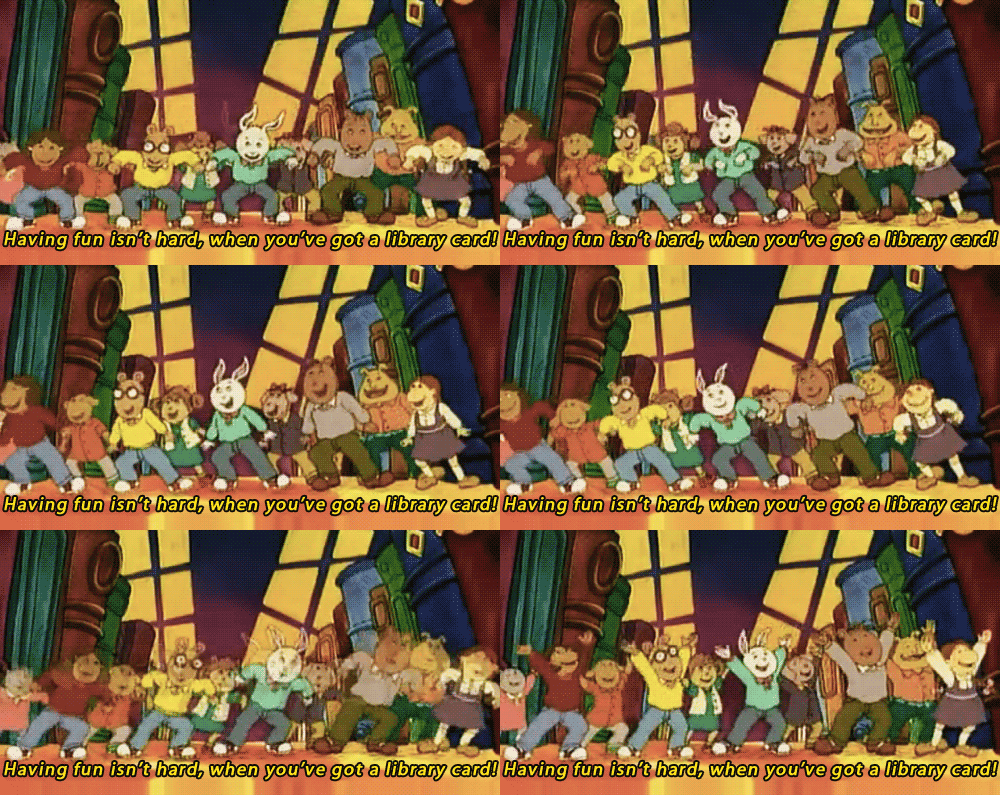
Having access to free books is really pushing me to read more and to branch out beyond my usual genres, so for any book lover I really cannot stress enough how revolutionary a library card is. *Resists the urge to break into the library card song from Arthur*. If someone told me there was a place you could go to, on nearly every high street, where you can test a meal for free without having to buy it just to see if you like it; I would be all over that like a rash. Being able to read books for free? Honestly if I didn’t know better, I would’ve said that only exists in the dream world where I am also married to Justin Hawkins and Johnny Depp never became a greying domestic violence perpetrator. Matilda was definitely onto something here…