Lockdown Library Part One – The Bobby Girls

It’s all gone a bit horrible, really, hasn’t it? I vividly remember saying to a colleague before Christmas how I wished I could have just a few paid weeks off work to relax, joking that I would love maternity leave without the maternity element of it. With hindsight, the phrase ‘be careful what you wish for’ comes to mind. Being stuck in the house with nothing but time to kill is every writer’s (and reader’s) dream, but every time I’ve thought about putting pen to paper (or fingertips to laptop), I’ve never been too sure what to say. I don’t really know how I feel about it all; that seems to change on an hourly basis, and social media is littered with people being criticised for enjoying lockdown when other people are struggling, and others being criticised for being too negative and not appreciating what they have, so I’ve been too chicken to say anything at all on the subject. So, I cannot profess to be an expert on how best to deal with lockdown, because my strategy of binge watching ‘Call the Midwife’ and ‘Tiger King’ (eclectic taste, I know) and baking endless sugar filled goodies has led only to weight gain and insomnia. The only thing I feel I can offer, is to continue reviewing books which are currently helping me to pass the time, so, in the spirit of ‘keep calm and carry on’, I reasoned that I should continue doing what I do best – getting excited about books.

We all know that I love a good saga, so when the Kindle store recommended ‘The Bobby Girls’ to me, I had high hopes. Hopes which Johanna Bell’s excellent writing and endearing characters definitely exceeded. Having worked closely with various police forces within many of my ‘day jobs’, female police officers are something which I, like most people today, take completely for granted. However, despite having an interest in women’s history, I’m ashamed to admit that I had a fairly limited understanding of how female police officers came to exist. I did an entire module on the history of policing at university, and I don’t think female officers got one mention; clearly I was too busy stacking shelves on the weekends to fund weeknight pub crawls across the college bars to take the time to question that.

So, ‘The Bobby Girls’ follows three women from vastly different backgrounds who all sign up to be part of the ‘Women Police Volunteers’ (WPV) during the First World War. I had never actually heard of this volunteer scheme before, so it was certainly interesting to learn about from a historical point of view, but mostly just exciting to tag along with three fiercely empowered women as they protect London’s streets from dangerous criminals and help their fellow sisters wherever they can, all out of the goodness of their hearts, despite constant discrimination from men and the prospect of them having the right to vote seeming even further away than the complete end of lockdown restrictions.

“‘How has the WPV changed you?’ She asked her instead. Irene looked thoughtful. ‘I’ve realised that people from all walks of life can be friends,’ she said. ‘And that I can achieve anything I put my mind to.'”

Although this saga follows four main recruits of the WPV, this instalment focused mainly on the slightly naive, upper class Maggie (or Posh Spice, as I think could be an appropriate alter ego), and her story of discovering her own strength, as well as learning more than she bargained for about a world which her parents had kept her sheltered from. Although she has quite the personal journey in this one, I finished the book with a niggling feeling that her story is really only just beginning; and am definitely looking forward to seeing where her newfound strength and confidence takes her, as well as learning more about her empowered comrades and where their WPV experience will take them. Maggie, Annie and Irene’s binding friendship and fearlessness had me wanting to stand up and belt out ‘Sisters are Doin’ it For Themselves’, but for the sake of my poor neighbours, I didn’t. Plus, I couldn’t put the book down for long enough to actually do that, for fear of missing out on their next exciting escapade. Although, the second instalment is out in May, so it is always nice to leave something for next time.

“‘As I’ve always said, if you want a job doing properly then you should ask a woman to do it,’ she added, her eyes twinkling mischievously.”

Blog Tour – Pearl of Pit Lane

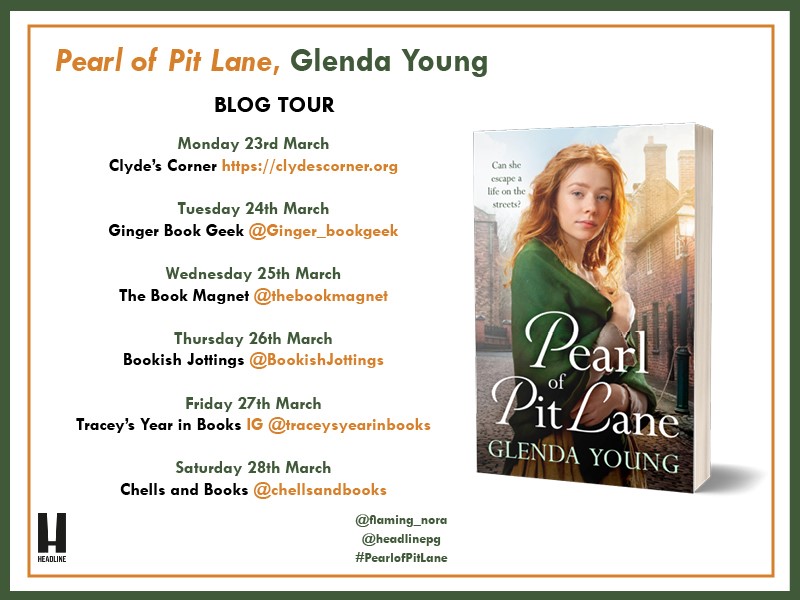
Glenda Young is an author who I have really come to like, and who has quickly become one of the main names in saga/historical fiction genres, but unfortunately she seems to have an irritating habit of releasing books at times when my life is too busy to give them the attention they really deserve. How inconsiderate of her. I did find time to review her first novel, which I loved, the second was devoured in the midst of my wedding plans and so was overlooked on my blog, and the third clashed with a frantic Christmas. However, her third novel was recently released in paperback, so it seemed like the right time to finally give it the hype it deserves; and, as we all know, I’m never one to shy away from an opportunity to get excited about great books within a blog tour!

Even though I’ve just listed them choronologically, Glenda’s novels can be read in any order, and would no doubt be enjoyed just as much in any combination. Personally, I would suggest a binge-read if you haven’t tried any of them; and if the news is anything to go by at the moment it seems like the safest place to be is at home with some great books, so why not get the Kindle stocked up?
‘Pearl of Pit Lane’ follows orphaned Pearl Edwards, who has a tough life with her aunt Annie, who has to walk the ‘pit lane’ to keep a roof over their heads, but as times get harder Pearl finds herself faced with few other options than to follow in Annie’s footsteps. However, her strong will and fearless independence helps Pearl to find her own way in a difficult world, even learning more than she had bargained to about herself along the way.

“Put me to work on the pit lane, would you? Is that all you think I’m worth?”

Like its two predecessors, ‘Pearl of Pit Lane’ takes place in 1919, a time period which I find is generally quite overlooked within historical fiction. It’s understandable that it would be, I suppose, since it can reasonably be assumed that it was probably a ‘lull’ after the massive events which dominated the previous four years (like that weird week between Christmas and New Year when nobody knows what the hell is going on), but that’s what makes these stories all the more interesting. We all know a lot about what happened between 1914 and 1918, but what happened after that? I was naive enough to think that things probably went back to ‘business as usual’, after this, but as this story in particular informs us, that was certainly not the case. Set in the North East village of Ryhope, which is just next to where I grew up, I initially thought that ‘Pearl of Pit Lane’ would have a degree of familiarity for me, but I was pleasantly surprised to discover Glenda’s words breathing fresh life in to a familiar place, to the extent that I felt as though I was being transported into a totally different world. So, her novels are absolutely not just for the attention of those of us who are lucky enough to be able to relate to some of the landmarks which still stand today.

Even though I grew up close to where the novel is set and studied history for a good few years, I had absolutely no idea about the history of ‘pit lanes’; so it was really intriguing to learn about a darker side of the past. That’s one of the many wonderful things about Glenda Young’s writing; all of her novels take a fairly dark element of the time period in which they are set, but her fierce female protagonists always manage to take those struggles and turn them into inspiring and heartwarming triumphs which have the reader holding back tears by the end. It’s a difficult balance to get; managing the tipping points between the more gritty and unpleasant aspects of history with the warming romance which comes with this genre, but she always seems to achieve it perfectly, and with the added bonus of totally inspirational characters.

“Her clothes might be worn and shabby, but she had a heart the size of Ryhope itself.”

Although this post is specifically focused on ‘Pearl of Pit Lane’, I thoroughly recommend reading all of Glenda Young’s novels; I definitely enjoyed all three in equal measure and am looking forward to the next, and, if you keep the characters from each one fresh in your mind; you might find a few bonus surprises in the other stories. The only thing which I feel Glenda has left her readers without is a spin-off novel in which all of her formidable female leads join together to overcome some huge adversity, because that would be absolutely epic; like ‘The Avengers’, only actually enjoyable and inspiring.

thumbnail_Pearl of Pit Lane blog tour card

Blog Tour – Triumph of the Shipyard Girls

“It has been, and probably always will be, a constant battle for us women – having to prove our worth just because we’re female – and made so much worse by the knowledge that we’re actually so much better than the men.”

Becoming emotionally invested in a series, regardless of its format, is a risky game. There is always a feeling of inner conflict between a sense of loyalty to the characters and their stories, which you become so emotionally invested in, and the (sometimes questionable) choices of the writers; not unlike the whole Rachel and Joey getting together debacle on ‘Friends’, which seemed to have been clumsily thrown into the mix just to pass the time until the final series. Thankfully, I’m starting to feel quite certain that Nancy Revell is never going to put her loyal ‘Shipyard Girls’ fans through such trauma; since each instalment seems to be even better than the last. On that note, now that this series has a fairly established following, what are we calling ourselves? If Taylor Swift has ‘Swifties’, does that make us ‘Revellers’, perhaps? We’ll find it.

So, here we are in book eight and with the story lines still feeling as fresh as ever (phew). I believe ‘Triumph’ is book eight of twelve, but I could also be making that up – Nancy please feel free to shout at me if I just accidentally either sold you short or added to your workload. I’ve said it before, and will no doubt continue saying it every time a new ‘Shipyard Girls’ book drops, but it must be a really difficult task managing to keep a set of familiar characters and story lines feeling new and exciting for loyal readers over so many instalments; I don’t know how Nancy Revell manages this, but whatever she is doing is working perfectly. I’m a classic binger of everything; books, T.V. programmes, Haribo fizzy cola bottles – my patience (or lack of) never allows me to savour anything, so if this were my series, the story would definitely have been rushed through in a maximum of two fairly low quality installments. Infuriating as it was to finish ‘Triumph’ and still not have some of the answers I wanted, this frustration has now been channeled into unrelenting excitement for the next book.

The great thing about having a longer series is of course that it gives the author plenty of scope to play around with character development. I’m not entirely sure how this happened, it seems to have emerged as mysteriously as the lower pack pain which emerges as one approaches thirty, but I’m somehow now firmly pro-Helen. The biggest step towards this was of course within ‘Courage of the Shipyard Girls‘ and the dramatic final scenes in that book, but the drip-drip effect has continued and for some reason all of my earlier bitterness towards her has gone. Like when Geri re-joined the Spice Girls, it just…works. All the nastiness seems to have been forgotten, or just doesn’t feel important any more. Kudos to Nancy Revell, because that cannot have been an easy manoeuvre to orchestrate, sort of like trying to parallel park uphill.

“She had a habit of plunging into life – and more so, love – head first, only to resurface and find herself surrounded by chaos.”

Although I have a soft spot for all of our girls in this series (obviously except you, Miriam), Polly and Rosie have always been my two favourites; and both of them taking more of a central role within ‘Triumph’ suited me perfectly. Like most readers of this series, I’d always had my theories about Rosie’s past so it was nice to have that curious itch scratched within this instalment; and to see some continuation of positive things happening to our lovely Polly, finally! Of course Nancy Revell has once again served her readers a hefty dose of drama with a side of increased blood pressure whilst it unfolds before your eyes, but I feel like ‘Triumph’ may have been the most positive book in the series yet. By ‘positive’ I don’t mean that the others are all rubbish, far from it, but it felt like having a nice catch up with old friends and was lovely to hear that things are, generally speaking, going well for all of my girls at the moment. With all the other horrible things which have gone on, both within the lives of our Shipyard Girls and in the scary real world at the moment, it was nice to have a little pocket of positivity to enjoy within all the hideousness, and very much needed.

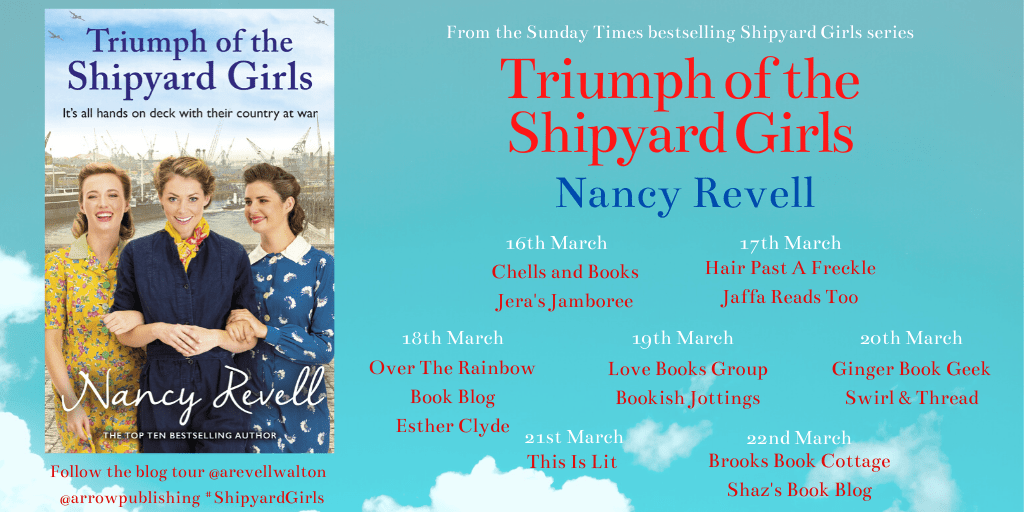
Triumph of the Shipyard Girls Blog Tour Banner

Why not have a look at the rest of the blog tour for more ‘Shipyard Girls’ hype?

My Year in Five Books

At the end of last year, I set myself the difficult task of choosing five highlights from the mass of books I had managed to consume within the previous twelve months; and, throughout December, I am very much a traditionalist so have decided to do the same again. I have not counted the individual books which I have read this year, though I can say with confidence that the total will absolutely be lower than last year’s impressive forty six. Hey, it’s been a very busy year at work and with getting married in August I barely had the energy to hold a book upright never mind read one most days; though having said that, a nicer way of putting it might be to say that I went for quality over quantity in my reading material this year, which is clearly evidenced by the excellent selection of top-tier books mentioned below.

The Five – Hallie Rubenhold

No, this list is not in any kind of ranking order, but ironically this one is called ‘The Five’. One of the few genres which is able to pique my enthusiasm as much as historical fiction is true crime, so when a colleague mentioned ‘The Five’ and how it covers the real life stories of each of the victims of Jack the Ripper in Victorian London, I was hooked from the synopsis alone. I’m not sure how much creative freedom Hallie Rubenhold was able to use within their stories; I would imagine a fair amount would be needed when trying to piece together accounts of the lives of relatively unknown women from records which were made over a century ago.

However, either way, it was clear throughout the book that the author had put a huge amount of effort into preserving what few historical records were available for these women, but was able to present them in a way that was as easy to read as any other fictional story, which is certainly no easy task. I was completely dumbstruck to learn that the majority of Ripper victims were not actually prostitutes, and most of them began life in an entirely different social context to that in which they died, and I am ashamed to admit that I had always believed the media hype that the Ripper was a killer of sex workers, which perpetuates the wider myth that this is all the victims’ lives were. From a feminist point of view, I felt a bit sheepish to have had that stereotype entirely disproven by walking in the victims’ shoes and experiencing the complex lives of these five interesting women from their own unique perspectives.

The Lighthouse Keeper’s Daughter – Hazel Gaynor

This one is probably a bit of a lazy or a cop-out point to include, since I did already give this book its own individual review earlier this year, however it is absolutely deserving of a second mention, and was quite possibly my favourite literary discovery of the past year. Having grown up spending the majority of my youth in Northumberland, I have always been well-versed in the legendary story of Grace Darling; but she is sadly a heroine who receives quite minimal attention outside of the geographical area within which she existed, and I’m certainly not aware of any other fictional novels about her life (though please do send me links via my home page if they do exist).

As with ‘The Five’, breathing new life into a story with which people may already be familiar through historical documentation is no easy feat, and very little is known about Ms Darling’s life since she was famously very private. However, Hazel Gaynor manages to humanise the legendary figure through the suggestion of a possible secret romance which, although history suggests is unlikely to have happened, is really thrilling to imagine and is communicated with such care and dignity so as not to undermine the factual accounts of her life that it was an absolute joy to read.

Courage of the Shipyard Girls – Nancy Revell

Again, it’s probably a cop-out answer to include things I’ve already reviewed this year, and an instalment of a saga which I have already reviewed to death on this blog (I will not apologise for this, and will continue to fill this page with more Shipyard Girls-related hype for as long as Nancy Revell continues to grace us with it); but when I really thought about this list, Courage of the Shipyard Girls is something which immediately jumps out to me as a book which I vividly remember enjoying this year, so it can stay.

Although I love the whole saga, this specific book continues to stand out to me as the highlight of the series, in terms of character development and the emotional impact of various climatic plot twists which genuinely left me in tears as the story concluded; and although I am always an advocate of any saga being read in the correct chronological order, Courage of the Shipyard Girls forms the exception to this rule, and I would say that if you are only able to read one book from this saga for some reason, then make it this one.

The Horsekeeper’s Daughter – Jane Gulliford Lowes 

Yet another cop-out answer, but really, if a book is so good that it makes my top five in an entire year, then it makes logical sense that I would have already enjoyed it enough to decide to give it its own post, yes? Quite similarly to ‘The Five’, this is an odd mix of fact and fiction, which follows the very real Sarah Marshall on her journey as a migrant to Australia in the late nineteenth and early twentieth century. Although it isn’t written through the voice of the main ‘character’, the author manages to achieve a delicate balance of allowing the protagonist’s voice to be heard through the personal touches she adds to existing concrete facts; so it reads very much like any other historical fiction book despite being very much a factual account of real events. I must admit that when this was first recommended to me, I was sceptical and thought ‘surely that can’t really work, it’s either fictional or it isn’t’. However, Jane Gulliford-Lowes’ writing talent expands far beyond my scepticism, and within ‘The Horsekeeper’s Daughter’ she creatively masquerades a sequence of hisorical facts as a really enjoyable piece of prose – it’s like the literary equivalent of a Sunday afternoon blockbuster on TV, it just ticks every box for a relaxing yet intriguing read.

Our House – Louise Candlish

‘Finally!’ I hear you exclaim, something which I haven’t already bored you with by rambling on about it earlier in the year. I genuinely have no idea why I didn’t allow ‘Our House’ its own review; and I will confess that I just spent a good few minutes scrolling through my own content, having previously been convinced that I did. Evidently I did not, and I cannot explain why because I recommended this book to pretty much everyone I spoke to back in March. The mind boggles. Anyway, I picked this book up in the Waterstone’s ‘buy one get one half price’ bin when I was buying something else, and I must admit thrillers are not my usual choice (as clearly evidenced by the barrage of historical fiction I’ve just thrown at you in the last few paragraphs), but something about this book struck me, and once I started reading it I began to understand why.

The story begins with a woman returning home and discovering total strangers moving into her house, which has been emptied of all its contents and bought by someone else. Initially, I thought this was going to be a kind of ghost story because it seemed so improbable, but in a very ‘Gone Girl’-esque twist of a marriage turned sour and a husband and wife working against each other, I discovered that her husband had mysteriously disappeared and had had the house legally sold without her realising; which is communicated excellently through a totally unbelievable plot which holds more twists and turns than a back road through rural countryside.


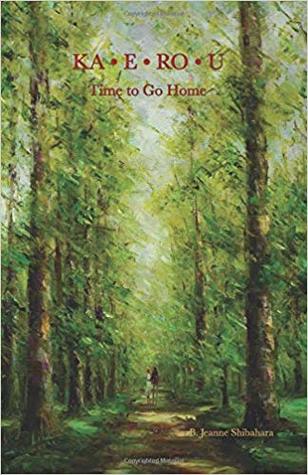
Review – Kaerou: Time to Go Home by B. Jeanne Shibahara

I consider my literary taste to be very diverse, I literally do not judge a book by its cover and will give anything a try. However, when the lovely B. Jeanne Shibahara sent me a copy of Time to Go Home I must admit I was intrigued, finding something which is so unique is quite rare for someone who reads as extensively as I do. It sounds ridiculous to say but I would struggle to put this story into a particular ‘genre’ as it crosses over historical fiction, romance, mystery, humour and even military history at times – it seems to have a bit of everything which is unusual and it can’t be an easy task to add so many genres into a mix and make it work – but, like sweet and salty popcorn, sometimes mixing things up can be a great thing.

Time to Go Home follows Meryl, a Vietnam War widow whose grown son has moved to Japan and is struggling to find her place after her father remarries. For one reason or another, a Japanese flag from WW2 ends up in her possession, and she begins the task of trying to reunite it with the soldier’s family, leading her to embark on a journey through various locations in Japan, meeting an eclectic mix of characters along the way. The thing which struck me most within this story was the rich history behind each character, at first I was a bit confused as to why secondary and less important characters had such intense back stories, but it added so much depth to the overall plot and placed all the historical events in a much more relatable context for the reader, allowing for a more emotive response to the story.

World War Two has a tendency to be “over-done” within historical fiction, but the Japanese involvement is sadly something which is, at least in Britain, completely overlooked. The same applies for the Vietnam War, after each chapter I found myself Googling various things to understand when they took place and what the conflict was actually about. It was really refreshing to read historical fiction about something other than The Tudors and The Blitz, and if Shibahara hadn’t taken the time to give some historical back stories to the characters, the emotional impact of the time periods described would have been lost on me. It is one thing to understand the facts of what happened, but another experience entirely to read about it from a person’s own point of view and lived experience, even if parts of it are fictional. All of these emotional stories built up to the climactic finale of Meryl reuniting the flag with the sister of the soldier to whom it had belonged, and the similarities between their experiences of loss, despite being on opposite sides of the conflict and yet somehow connected, was very moving.

“In Japan…everywhere…red strings tie all people we meet together. Some strings are weak. Some have tangles. Some strong.”

Whilst exploring Japan, Meryl meets friends of her son’s who guide her through the new culture. It was refreshing again to read about a culture with which I’m completely unfamiliar, I felt like I was Meryl at times – exploring a new land with new friends. Fiona and Jo were my personal favourites, they provide a comedic relief from the seriousness of the rest of the plot, which is necessary for the reader but also very enjoyable in itself. They reminded me a bit of Fiona from Four Weddings and a Funeral with their dry humour and sass towards each other; which was a nice break at times from the more dominant themes of loss and moving on from difficult experiences. However, Fiona still shows her softer side towards the end which was an interesting twist which showed her in a very different light than I had expected to see but nevertheless enjoyed.

“Their cultures, personalities and generations were each as different as any two extremes could be, but the women had grown fond of one another…the labels society had stuck on them had fallen off”

As always, I don’t like to spoil books too much in my reviews, as it defeats the object of persuading someone else to read it. However, one of the final scenes between Meryl and the Professor in the cemetery once she returns from Japan was very moving and probably my favourite scene in the book. Also, the very end provides such a twist that I never saw coming but loved – it’s ironic that Meryl’s son Byron is a focal character from the first pages but isn’t revealed until the very end, but the twist is definitely worth waiting for.


Review: Courage of the Shipyard Girls

If you’ve read any of this blog so far, you’ll have picked up a slight hint that I like The Shipyard Girls. I plan my reading year around The Shipyard Girls. I stopped reading another book so that I could read this one. I have put aside a new book for which I have waited a year to be released, so that I could read Courage of the Shipyard Girls. As usual, I’ll try my best to keep this spoiler-free since Courage has only just been released and I know not everyone reads like me (i.e. consuming books like an anaconda desperately devouring its prey). For anyone who is totally new to The Shipyard Girls saga however, I would suggest you read my earlier post first to get a general idea of what the saga is and why it’s so brilliant (shameless self promotion there).

In the words of the great Julie Andrews, the beginning is a very good place to start. Like anyone who read Victory for the Shipyard Girls, I went into Courage of the Shipyard Girls with an overwhelming anxiety over what had happened to Tommy. I was so cheesed off about this at the end of Victory that, when I went to the signing for it, I said probably no more than five words to Nancy Revell. This was in part due to my anxiety at meeting a hero, but more to do with a desire to retain self-control and not flip tables while screaming in poor Nancy’s face ’IF YOU’VE KILLED TOMMY OFF I WILL COME AFTER YOU’, and being publicly blacklisted from my local Waterstone’s. Again, I don’t want to spoil it for anyone who hasn’t finished yet, but all I will say is that I will be going to my local signing for Courage, and there is no risk whatsoever of me flipping tables.

Then the other big development from Victory was Helen’s pregnancy which, I must admit, I was really excited for because I just wanted to see that little snake get what was coming to her. However I am going to hold my hands up and admit something I never thought I would say – I now feel sorry for Helen and sort of like her. Anyone who hasn’t finished Courage yet has probably just made the decision to stop reading this post, but I’m telling you once you’ve finished this one your opinion will be different. The relationship between Helen and Gloria was really sweet, as Gloria has somehow managed to melt the ‘ice queen’ side of Helen and draw out her kinder side that nobody knew was there (except Gloria and Nancy Revell). Also, at the end of Courage Helen is initiated into the Women Welders’ squad, which is something I never saw coming but am now looking forward to seeing pan out more. I have said before that there are no Kellys or Michelles in Thompson’s Shipyard, and while all of the main squad retain their fierce Beyoncé status, I have to say that although I like Helen being part of the crew, I don’t fully trust her yet and she remains at Kelly or Michelle level. This will be reviewed after book #7 however, because it’s become very clear how much Nancy Revell loves a plot twist and changing the reader’s opinion of the main characters – which is one of the many reasons why this saga consistently feels fresh and doesn’t feel close to being done.

Seeing another side of Polly was another thing that really stood out for me in this one. Having a saga with so many principal characters (and even more supporting characters) must be so difficult to write – I have images of Nancy Revell spinning plates like a circus performer trying to keep all the storylines going. Polly was my favourite Shipyard Girl in the beginning but she seemed to fade out in favour of some bigger plots in the last couple of instalments. It was great to see more of Polly again but even more intriguing to see her more vulnerable side. We all know our Women Welders are made of strong stuff, so seeing one of them hurting was a breath of fresh air, in an odd way. And for existing fans of the saga like myself, I found the juxtaposition of Polly and Bel’s relationship really interesting as it reminded me of the first Shipyard Girls book when Polly found Bel on the bedroom floor following the news of Teddy’s death, and was quite reminiscent of Polly taking Bel home when they were children. I always had the image in my head of Polly being the sturdy one who looks after Bel and it was interesting to see this go the opposite way.

“Rosie didn’t question whether Polly was up to work because she knew that she wasn’t up to not working. Building ships might not mend her broken heart, but it would help her survive”

The whole air raid sequence was the high point of this book for me, and I can’t fathom anyone disagreeing with me on that point. Given the time period in which this saga is set, there have been tense moments of a similar nature before, but never quite on this level and this was the first time a Shipyard Girls chapter genuinely drew tears out of me. Perhaps it’s because by this point in the series the readers are now extremely invested in the characters, I certainly feel like I know these girls as friends, so having them placed in such an intensely dangerous situation was very difficult to read. It was the first time in this saga I properly felt the emotional impact of the period in which the girls were living and I know this must be absolutely nothing compared to the real life experience of not knowing whether loved ones were safe after air raids; but for people like myself with no real connection to this time period I think this is as close as we can get to feeling that, which is no easy feat for an author so once again, hats off to Nancy Revell for making these stories come alive for the reader.

I know everyone says this about new books, but I would hand on heart say this was my favourite in the whole Shipyard Girls series. I loved all the previous books equally as they all tell different tales and have different themes, but taking characters I thought I knew and showing me different sides of them, combined with the air raid sequence absolutely blew the other instalments out of the park. The air raid sequence was the high point of the whole series for me, it was like a film’s climactic battle scene where every character had her bravery and strength put to the ultimate test.

“Blimey, the whole squad was here…Rosie looked like Boadicea going into battle with her cohorts behind her”

The timing of the release of this book is also very apt, in my humble opinion, because Sunderland is getting a bit of bad press at the moment. If you ask Netflix, we’re all hooligans with no other purpose than to watch football and brawl in the streets; if you ask the national news, we’re all racists who voted for Brexit like turkeys voting for Christmas; and if you ask the Crime and Investigation Network, this is a shell of a formerly great city with murder rates and drug problems rising in equal measure following the closure of the pits and the yards. To a degree, Sunderland is some of these things, but we are also the city that inspired Alice in Wonderland, that brought the world The Futureheads and Vaux beer, where Joseph Swan was inspired to invent the lightbulb and two of our lads are currently on the England football squad. This is a city of hard workers who would give their neighbour their last stottie if they needed it more, and would do so with a smile. As the Sunderland-born daughter of a former shipyard worker I can categorically verify that Mackems are hard working, friendly people who make strong ships and even stronger women, and if Nancy Revell hadn’t allowed the voices of our former Shipyard Girls to be heard, this may well have been forgotten. So on a personal level, I would just like to take the opportunity to say thank you to her.

“From the moment the klaxon sounded out the start of the day’s shift, every man and woman at Thompson’s shipyard worked flat out, as did every other worker in every other shipyard, engine works, factory, ropery and colliery on both sides of the river.
Their actions spoke louder than their words. They would not be beaten”

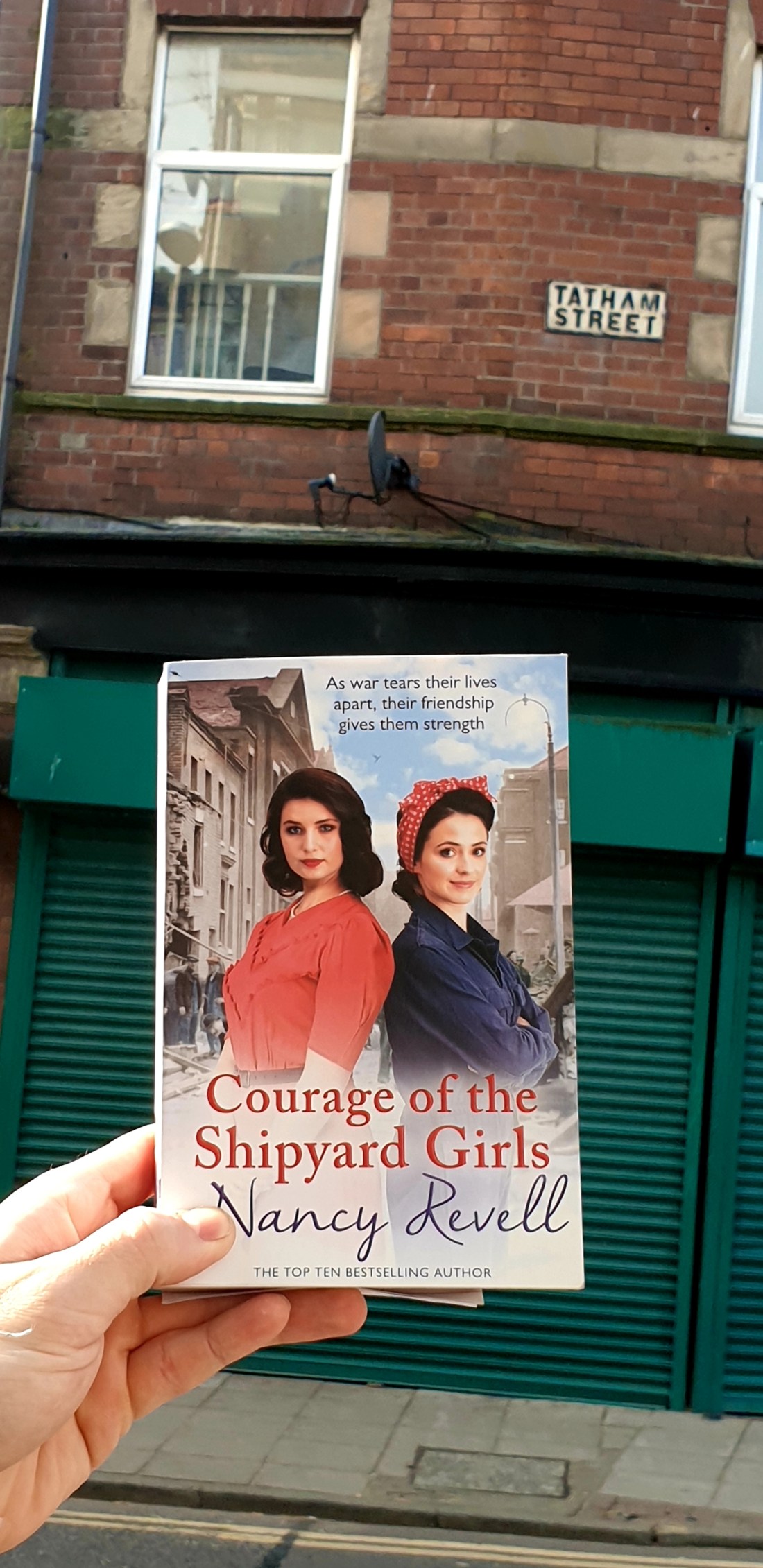
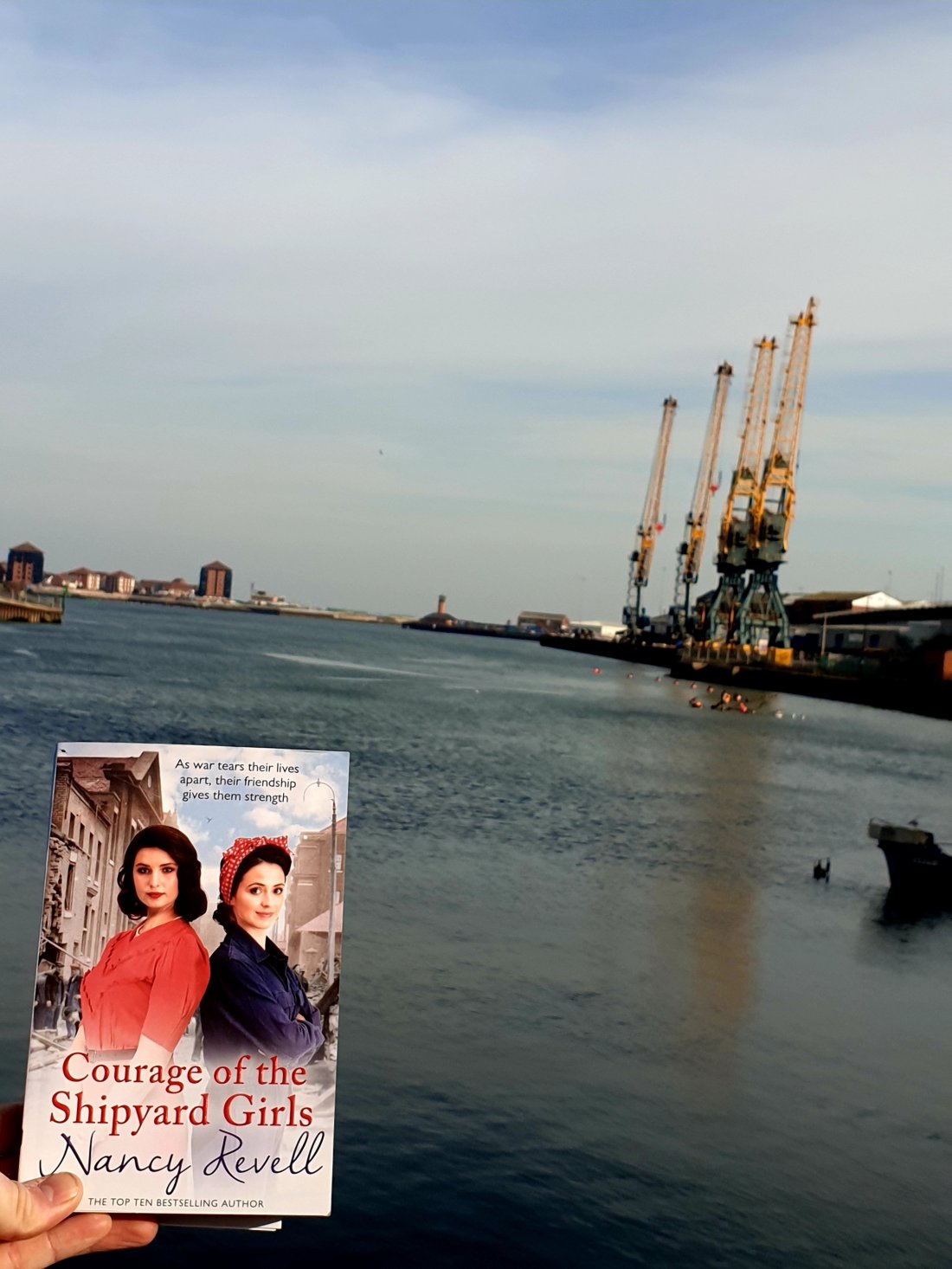
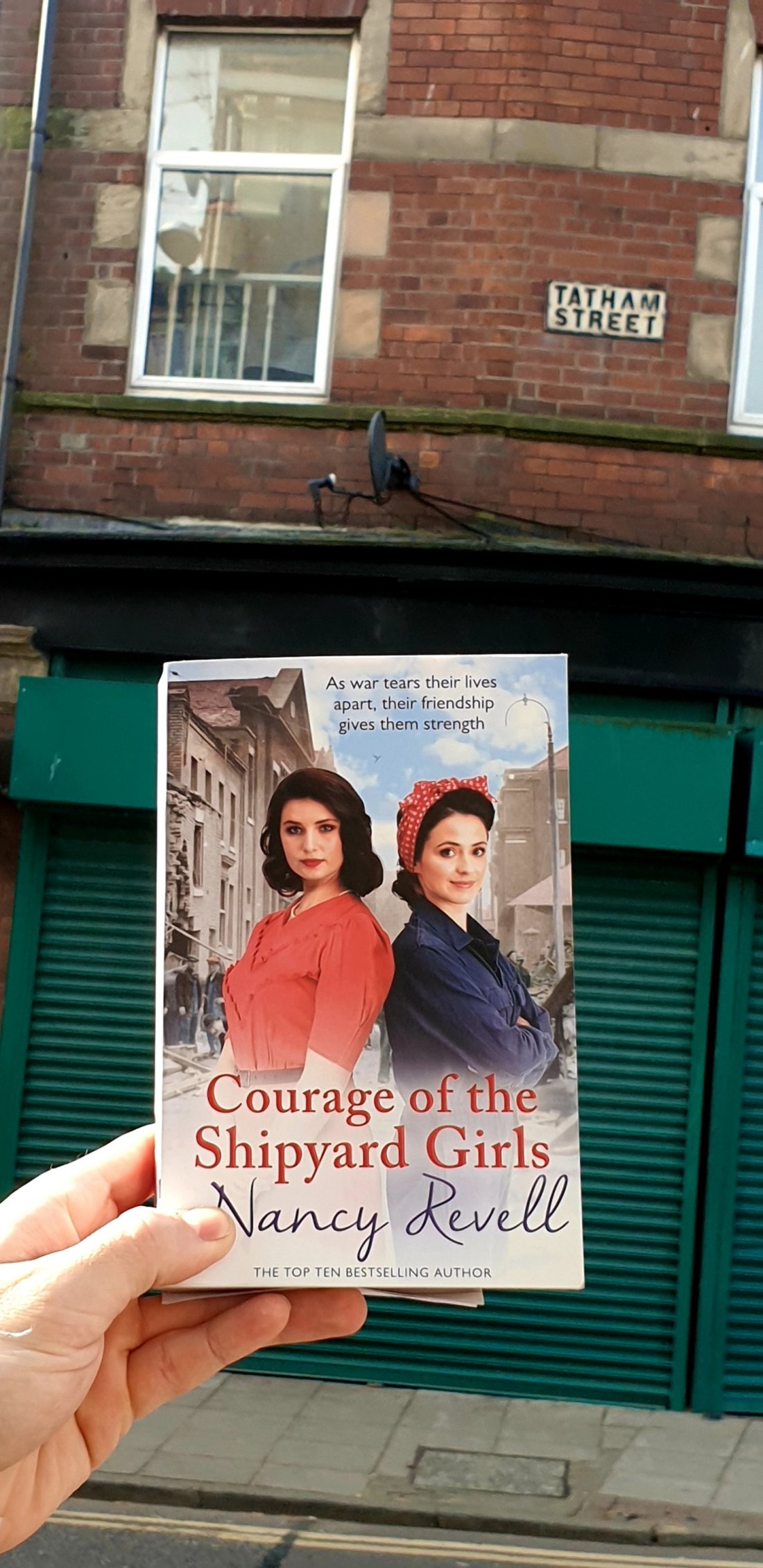
Took my copy on a little walk around Sunderland…

Review – The Stone Circle by Elly Griffiths

It’s almost embarrassing that I’ve had this blog for about six months now and have yet to make a specific mention of my love for Elly Griffiths’ Ruth Galloway series, but the most recent instalment was released at the beginning of February so it seemed the perfect time to profess said love. I first came across this series back in 2017 when I picked up The Woman in Blue by chance at my local Waterstone’s and was completely hooked, so I did what any rational person would do and consumed the previous seven books in the space of a couple of weeks. Although I loved the entire series, I do wish I’d realised at the first instance that the book I’d picked up was part of an existing series and had read them in chronological order because I ruined some quite major plot twists for myself by starting on book eight.

Ruth is one of my many, many literary heroes. Living alone in a cosy yet creepy cottage on the edge of Norfolk’s saltmarsh which I always imagine as Kate Winslet’s cottage in The Holiday but surrounded by an eerie fog, is basically the dream. She’s independent, intelligent and fiercely feminist which I love, and her day job is as an archaeology lecturer but somehow seems to get called in by Norfolk Police to examine murder victims’ bones at regular intervals. The only real plot hole in this saga is that people continue living in this area despite there seeming to be a new murder case approximately every six months.

Whilst I’m on the topic of Elly Griffiths’ fictional version of Norfolk Police force, this brings me to DCI Harry Nelson. Ah Nelson, how you confuse my emotions. I hated Nelson at the start of this series – he’s a narcissistic, indecisive pig who just loves to have his cake and eat it too. However, he’s also incredibly charming and clearly cares very deeply about both Ruth and his wife – we’re twelve books in now and I still go back and forth over whether I want him and Ruth to ride off into the sunset together and spend their remaining years solving crimes and doting on Kate, or stay as far away from each other as humanly possible because in many respects they are simply not compatible. To maintain any good saga, characters have to continually develop and this is something that Elly Griffiths absolutely nails. Keeping a story fresh after twelve books about the same set of characters is no easy feat, but I still feel like I’m seeing new sides of everyone every time I pick up the next book.

The Stone Circle probably wasn’t my favourite of all the Ruth Galloway series; I’d struggle to say which one was because I read them in such quick succession but A Dying Fall definitely stood out for me – the undertones of Pendle Witches made it extra creepy, though all Ruth books hvea given me a few creepy chills. However, that’s not to say I didn’t love The Stone Circle. The pinnacle of a good saga is that when a new book comes out, you feel like you’re catching up with old friends and this was no exception. Having a lot of principal characters, all of whom have intertwining plots and secondary characters around them, keeps the story fresh all the time and Elly Griffiths achieves that perfect balance for the reader where we can dive back in and know the characters inside out, but still be excited about fresh plots and new journeys on which they’re embarking.

Like every book in the Ruth Galloway series, I was immensely frustrated by The Stone Circle not answering the big question of what the future holds for Ruth and Nelson, and I’m still conflicted as to whether I want them to be together because Elly Griffiths does not like making things simple. The Stone Circle followed Ruth’s usual mysterious pattern of there being a really obvious culprit for whom it makes logical sense to have committed the crime, but you just know there’ll be a twist and the murderer will end up being someone you completely disregarded after the first few pages. Twelve times Elly Griffiths has fooled me with that. Twelve. The introduction of new characters created yet another layer to Ruth’s complicated story, and I’m quite interested to see if Star returns in book Thirteen and I would also like to keep seeing more of Michelle’s point of view. It would be great if Frank is explored more next too, because as much as I love Nelson I do also love Frank – which is precisely Ruth’s dilemma at this point in her journey.

Although it feels at this point like I’ve under-sold The Stone Circle, I do highly recommend the overall Ruth Galloway series. Each time I pick up an RG book I get completely sucked into her eerie world of lonely countryside and suspicious dark strangers appearing in the dead of night, which always makes me feel like I need to put the fire on and dim the lights – even if it’s the height of summer.

Review – The Stranger Diaries

Ah, the Waterstone’s January sale, how I love thee. Said sale was so good this year that I actually bought hardbacks! I never buy hardbacks; they hurt to hold, they look ugly on the shelf and the dust jacketsalways slide off – it’s a no from me. However, I’d had my eye on this Elly Griffiths gem for a while so was beyond thrilled to have found it half price. I went into The Stranger Diaries (TSD) with mixed feelings; I am a huge (probably too much so) fan of Elly Griffiths’ Ruth Galloway series, but I tried her Stephens and Mephisto series and just could not get into it. So, I assumed this standalone novel would be like either one of the above, a literary Marmite, if you will. And I’m pleased to say that, much like actual Marmite, I loved it.

For existing Ruth Galloway fans, it was very Galloway-esque (is that a word?) so of course I was completely invested by chapter two. Clare Cassidy is very much a less likeable Ruth Galloway, she’s very middle class and somewhat of a loner when she isn’t teaching but you do find yourself wondering why something seems slightly ‘off’ about her. Of course, with this being an Elly Griffiths, I trusted nobody until the very last page. The thing I really love about Griffiths’ work, which was absolutely the case with TSD, is that every character, no matter how insignificant, has a rich history. Not only does this make you care about what happens to the characters and their individual journeys, but it always completely throws me off the scent of who the killer is; I constantly wonder to myself “well why is she going into this much detail if that person doesn’t have some sort of significant link to the mystery?”, and the answer is – because she’s a bloody brilliant writer. Most mystery novels have a really obvious suspect who you know isn’t going to be the killer by nature of it being so obvious and convenient, so it then turns out to be the quiet, goody-two-shoes sidekick of the protagonist whom nobody suspected at all, and that’s why I generally don’t like this genre – it usually follows this set formula.
I don’t want to spoil the ending for people wo haven’t read it, but I was completely unable to narrow down who I thought the killer was. The actual killer was on my list of possible theories so I did figure it out in a sense, but it was a case of me knowing it without knowing I knew it. If that makes any sense at all (probably not).
As with the Galloway series, TSD is set in a sleepy village which is a fifty-fifty split for the reader between envy at the characters living in such a picturesque, country village, and a sense of ‘I would never relax if I lived there and would be constantly looking over my shoulder whilst making plans to move to any other town, so long as it has a Starbucks and a population of more than ten thousand. Again, as with other Griffiths stories, there is an alarmingly and statistically fairly improbable amount of murders occurring within a few mile radius, but that can absolutely be overlooked because it is all in the name of creating a perfect, eerie ambiance – something which should be encouraged at all costs.
So, in the usual Clyde review style of not actually saying anything about the plot and focusing more on my various obsessions with the characters’ lives/generally wanting to be certain characters, The Stranger Diaries is an excellent standalone mystery read. As it is set around Halloween and has a lot to do with witches and the supernatural (as well as good old-fashioned murder), it would be the perfect read for a dark, October evening snuggled up by the fire with a hot drink. And there is also a cute dog, so if that doesn’t sway you then I don’t know what will.

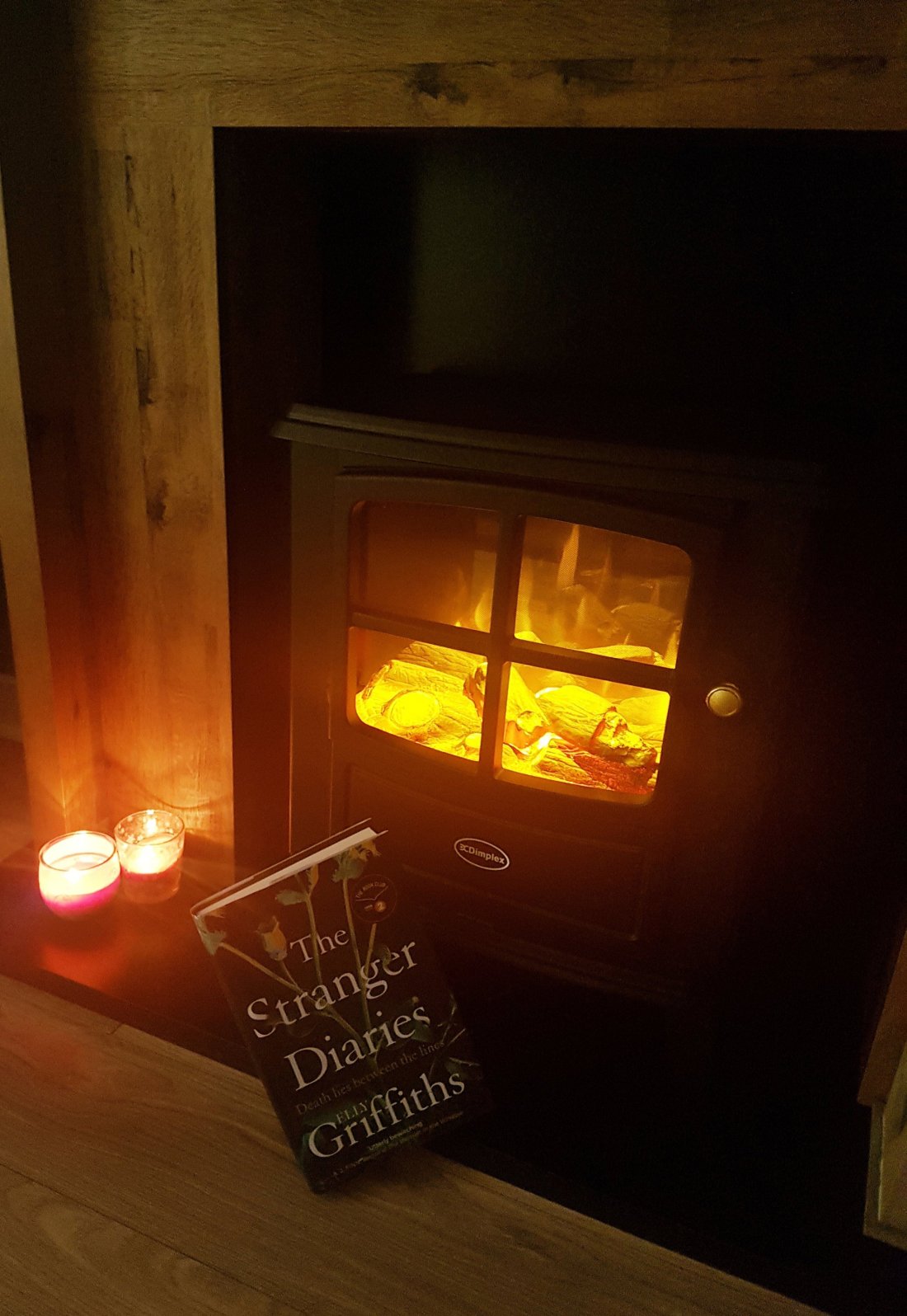
Best enjoyed by a warm fire on a cold evening.

Christmas Reads

Somehow, December is upon us. I know, I can’t believe it either (and I have confirmed this shock with every shop assistant, colleague, friend and stranger with whom I have come into contact in the last 48 hours – ah, Britain). So between the general festivities, a very busy job and planning a wedding, both reading and blogging have taken quite a hard hit for me over the last few weeks. December is a bit effing stressful generally though, and finding that selfish time to lose yourself in a book seems to get moved further and further down the priority list. But, the beautiful thing about most Christmas books is that they’re shorter than the typical paperback (ah, those tight deadlines to get it on the shelves by October – must be a total nightmare for the authors but such a win for the reader), so even in the Christmas craziness there is still plenty of time to get through at least a couple. Plus, Christmas books are actually the only books I will actually read more than once, so if that doesn’t convince you to partake then I don’t know what will. But anyway, here’s a list of some of my favourites, in no particular order (cue dramatic X factor music).

Christmas With Billy and Me – Giovanna Fletcher
This was the first Christmas novella I came across which related to an existing book, and it was beyond thrilling being able to re visit characters I already knew and loved and see how they spent Christmas. Although it does work as a standalone book in that you can follow the story without knowing the background, I would say that you don’t get the full effect of the plot if you don’t have the back story. But, it’s the perfect length for a quick festive indulgence when you get a spare moment, and like all of Giovanna Fletcher’s characters you feel like you’ve known them for years after only a few pages. And who doesn’t love a heartwarming love story set in a rustic countryside cake shop, Christmas or not?

Dream a Little Christmas Dream – Giovanna Fletcher
Just like the former, it’s the literary equivalent of a beloved rom-com you find yourself re-watching each year – think Love Actually but not several hours long and without all the unpleasantness -throws a quick glance in Alan Rickman’s general direction-. Again, I loved this particularly because it’s a spin-off featuring characters I was already invested in, but it still hits the spot for a little injection of Christmas romance for unfamiliar readers.

A Christmas Carol – Charles Dickens
Honestly, if you don’t know the plot of this one then why are you even here? Obviously I knew what I was getting  myself in for when I first read this a few years ago, I was raised on the Patrick Stewart film adaptation every Christmas Eve on the BBC (but the Muppet version still takes the prize in my humble opinion). But, that didn’t make it any less enjoyable. I love Dickens and it’s a constant source of embarrassment that I haven’t read more of his work (reading leave from employment needs to be a thing, my to-read list just keeps growing), but everything of his that I have read I’ve become completely immersed in. When I read this for the first time I wasn’t picturing Richard E Grant trying to stand up to Patrick Stewart, or Miss Piggy scoffing the chestnuts before dinner was ready, I was visualising entirely different people because his descriptions just make your imagination go wild, but the magic of the story is retained nonetheless. I have only one problem with this story though, and I say it every year, but WHY DOES MARLEY’S GHOST TELL SCROOGE HE’LL HAVE A GHOST VISIT HIM EACH NIGHT AND THEN ALL THE GHOSTS COME AT ONCE? IT MAKES NO DIFFERENCE TO THE STORY SO WHY IS IT WRITTEN IN THERE?
Seriously, if someone knows the answer to that then PLEASE tell me and put my out of this annual misery.

Ruth’s First Christmas Tree – Elly Griffiths
I want to be Ruth Galloway, I’ll just get that out of the way first. It’s ridiculous that I haven’t given this series its own post yet, but that will definitely come with time. This installment is quite lesser known even by existing fans, I’m pretty sure it’s only available as an e-book, but it’s very unique in that while it does work as a standalone story, at the same time it doesn’t drastically move the overall series’ plot forward to make things tricky for readers who missed this one. That’s a difficult task to master when there are already so many established characters and sub plots in the saga so far, so well done to Elly Griffiths on that one. If you ask me, all established sagas need a short Christmas story somewhere in there because there is something magical about revisiting your old friends (fictional characters who I see as my friends) at Christmas time. And what’s not to love about Ruth’s cosy cottage on the breathtaking Norfolk coastline in the winter? Honestly, the image I have in my head of her house since this book has been of Kate Winslet’s house in The Holiday, and if that’s wrong, then I don’t want to be right.

A Family For Christmas – Helen Scott Taylor
I came across this as an e-book a few years ago when I was looking specifically for a festive book to enjoy over the Christmas period, and I was not disappointed. I must confess I haven’t read anything else by this author, I have no idea whether she’s even written anything else, which is really shameful considering how much I love this book. It ticks all the boxes for the perfect festive story: a career woman who wasn’t looking for love until she found it, a widower not realising he’s ready to love again, a cute child, a quintessentially English country cottage in the snow, some sheep, you get the idea. In a nutshell, it’s heartwarming without being corny, but for some reason is not very well known – which is a bit of an injustice if you ask me.

One Perfect Christmas (and other short stories) – Paige Toon
Confession time – I bought this book three days ago and haven’t had a chance to read it yet. However, I love Paige Toon and have never not been totally overtaken by the story when reading one of her books so I have no doubt that this collection of short stories will be anything shy of their full length counterparts. Again, I just love the idea of being able to revisit your already beloved characters and see how they’re doing at Christmas. It’s like the literary equivalent of the Friends Christmas specials.

If you haven’t guessed already by this point, I LOVE a Christmas novella from an existing saga. When I rise to power, all sagas will have Christmas editions at regular intervals. Even the ones that have no real influence within the overall plot are so special, and they must be so fun to write by just having free reign to let your characters enjoy Christmas without worrying where the plot is going or whether you’ve tied up all the loose ends. Well, if anyone wants to hire me as a freelance Christmas spin-off writer for their existing sagas then please let me know. That is definitely my dream job right there.

Review – Into The Water

I’ll start this one off by making something clear – I enjoyed this book and I think Paula Hawkins is very talented. But, having said that, I do feel a bit sorry for her as an author. I imagine she feels like Hugh Grant’s dad in About a Boy, who wrote that really successful song and spent the rest of his life trying to top its success with a better one. It’s like when Nirvana stopped playing Smells Like Teen Spirit, but some of us like Smells Like Teen Spirit and unfortunately, it’s the general consensus that it is their best song.

Personally, I thought Girl on the Train was amazing. I know a few clever cloggs managed to figure out the twist before the end but sorry, I wasn’t one of you. I liked Girl on the Train so much that I wish I hadn’t already read it, just so I can have that experience of reading it for the first time all over again.  This, I think, is the sole reason that I finished Into the Water by feeling a little bit…flat.

Into the Water follows quite a similar formula to Girl on the Train, in that it is told by different people’s perspectives and the reader has to piece all of this together to follow the story – and I do think this is a great way of building the suspense and keeping the reader’s interest. However, Into the Water it told by about six different perspectives, and that of some additional quite minor characters, so I must admit I spent the first two thirds of the book referring back to the ‘who’s who’ guide which sits before the prologue. Sorry, but if your reader is still doing this two thirds in, there are simply too many main characters to keep track of. Each character, no matter how minor, had a rich history to them, which in itself is absolutely not a bad thing (quite the opposite), but when you have so many main characters there just is not room for such depth to each one and it starts to weigh quite heavily on the reader’s head. The plot had more complexities than Girl on the Train as well, because it includes flashbacks to completely different eras as well as different characters’ past experiences, so it was just a bit too much to follow.

The plot itself was great, a lot of things happened early on that made me think ‘no way is this going to be made relevant at the end, there’s no chance that all of these pieces are going to come together’, but they did. Paula Hawkins would not get seven years of bad luck if she dropped a mirror because she’d piece that glass back together perfectly in less than an hour – I have no doubt about that. I do however feel that there wasn’t a need for some of the sub plots, for example I don’t think Helen needed so much of a role in the story, and the whole conflict between Nell and Jude didn’t feel that relevant to the overall mystery. It felt to me like their conflict was there to justify Robbie’s place in the story, and he seemed to exist only as a means of throwing the reader off the scent of the actual killer – much like the therapist in Girl on the Train. But, having read Girl on the Train first, I was too familiar with Paula Hawkins’ mind games. So, even though on paper Robbie seemed like the obvious culprit, I knew that the obvious one would turn out to be totally irrelevant in the end, and he only seemed to feature a couple of times in the story. My logic was that if he was in any way important to the ending, he would be featured in it far more than he actually is, so when Jules went to the garage to challenge him over his involvement, the tension just wasn’t there for me.

On the whole I did enjoy Into the Water, but it followed the typical plot of this genre so personally I found the twist very easy to guess and the mystery very easy to solve. But, the success of Girl on the Train must have created immense pressure for the author, and it definitely wouldn’t put me off reading anything she publishes in the future. Even though you know what’s coming, Hawkins’ ability to draw the reader in and make you see, smell, hear and feel the surroundings that the character does means I will still be spending many a Sunday afternoon getting lost in her characters’ worlds, as long as she keeps creating them.