Thoughts After ‘Midnight Sun’

Yes, it’s been quite a while since ‘Midnight Sun’ landed and rescued us all from the horrors of 2020 by mentally transporting us back to the blissful time of 2005/6. However, 768 pages is quite a lot of angst to get through, especially when one has a very demanding full time job. Sadly, ‘new book which I’m excited about leave‘, isn’t a thing; and a 768 page hardback is quite difficult to sneak under the table to read on the sly in meetings…not that I’ve ever done that…for a while. I thought about making ‘Midnight Sun’ the subject of my next review, but honestly by the time I ploughed through to the end, I had largely forgotten any significant points from the beginning or middle. Nevertheless, I did still enjoy it on the whole, and it prompted some after-thoughts which my husband and dog had no interest in listening to, but I felt the need to share somewhere – so naturally I reasoned that strangers on the internet would make the perfect listening (or reading) ears.

The experience of reading ‘Midnight Sun’ was the closest sensation I’ve had to being able to re-read a familiar book with fresh eyes, and without having to first experience some level of memory loss. I never re-read books; my late mum always said one of her biggest fears about dying was the possibility of leaving this planet without having read literally all of the books ever, and that really stuck with me. It has never made sense to me to get hung up on re-visiting the same stories when there are always so many new and exciting ones to discover, though the sad thing about reading a great book is that, even if you re-read it, you’ll never experience that same level of excitement and anticipation of unexpected plot twists and character development in the same way again. But re-telling the same story from another character’s perspective? This, I can get on board with. Despite my personal objections to Edward Cullen as an entity in himself, ‘Midnight Sun’ was the closest I’ll ever get to re-reading ‘Twilight’ for the first time, which was a special and important rite of passage for pretty much every female born in the early 90’s.

I was always very firmly ‘Team Jacob’ (and still passionately am, especially when I’m a few glasses of wine deep and watching ‘New Moon’ on Netflix); so of course I opened ‘Midnight Sun’ with a scowl and emitted very deliberate tuts at regular intervals throughout its reading, much to the irritation of my husband. But they do say to keep your enemies closer, and it has to be said that Stephanie Meyer definitely made full use of this opportunity to explain and somewhat defend Edward Cullen’s massive personal flaws. Some books will always remain classics despite some quite troubling themes, and although I seriously doubt that a generation of former mid-Noughties emo girls could ever generate sufficient hype to give the ‘Twilight’ saga anything approaching the same level of status as the universally classic, and yet equally problematic, ‘Wuthering Heights’; it was refreshing, and definitely relieving, to have the more problematic aspects of ‘Twilight’ re-visited and explained in a new light. In summary, we finally found out why Edward appears to be such a controlling d*ck throughout.

So, having seen Stephanie Meyer achieve the impossible and finally get me kind of on the side of Edward Cullen after all these years, I started to wonder (like Carrie Bradshaw), why stop there? I have no doubt that this has been a thing for a long time, and there must be a multitude of fantastic books already in circulation which have equally gripping spin-offs from the perspective of other characters, but how great would it be if this was a thing for every book we enjoyed? A quick google of this phenomenon on my post-Midnight Sun buzz uncovered some absolute dynamite book ideas which clearly other people were much quicker off the mark about writing than me. I mean, Jane Eyre from Mr Rochester’s perspective? You’re keeping your secret wife in the attic, bro, there must be another story worth telling there. Watch this space for my thoughts on that one…

Lockdown Library Part Two – The Flatshare

No, I haven’t left my husband and gone into a flat share, even though the sound of him shouting and swearing at his friends/the game they are playing/the other players/goodness only knows what else from his ‘man cave’ upstairs continues to assualt my ears on a daily basis. I shared flats for three years whilst I was a student, and hated two of those years with a vehement passion; I’m definitely too territorial to live with more than one other person (and even that is a struggle sometimes, especially in lockdown). Where was I? Oh yes, ‘The Flatshare’. This book was recommended to me by a friend with the single promotional line of “it’s totally Georgia-level chick lit!” (for clarity, my friend’s name is Georgia, this isn’t a separate sub-genre of women’s fiction, that I know of). I must confess that I was a bit apprehensive; whilst I fiercely disagree with the notion that ‘chick lit’ entails bad or sub-par writing, Georgia’s taste in chick lit is a little bit more…fluffy…than mine. I like a bit of romance as much as the next person, but I also have a cynical side which just needs a bit more substance to a story to balance out all the unneccessary mushiness (*cough* ‘Fifty Shades’ *cough*). That said, being stuck in the house with literally nothing else to do seemed like the perfect time to roll the dice on a new book – what did I have to lose? But thankfully, Beth O’Leary’s intriguing characters and twisting plot did not leave me disappointed.

“I explicitly told you that the first rule of flatsharing is that you don’t sleep with your flatmate.”

As a northerner, the struggle which London based twenty-somethings have to endure to keep a roof over their heads is somewhat alien to me. However, the overpowering desire to not have to move back in with one’s parents following a difficult break up is a truth which I think is universally acknowledged. So, Tiffy’s decision to accept the unorthodox arrangement of sharing a flat, and even a bed, with a complete stranger to avoid such peril is certainly understandable. And after all, her elusive flatmate Leon works nights and spends every weekend at his girlfriend’s house, so although they sleep in the same bed, they don’t actually sleep together; thus the first and foremost rule of flatsharing remains unbroken, right?

“Come on! You can’t share a bed and not share anything else, if you know what I’m saying.”

Although I started ‘The Flatshare’ thinking that it was going to be a fairly standard romantic story of two people initially failing to realise that their true love was right in front of them all along, this prediction was quickly forgotten as the complex plot began to unravel. The story is told from both Tiffy and Leon’s points of view, which are distinguished through completely different writing styles; to the point where it’s almost difficult to believe that the entire book was written by one person. This cannot have been an easy process for Beth O’Leary to maintain, but it really made me believe that I was inside the minds of both principal characters, and was almost like reading two different books. Both of its lead characters are also perfectly flawed in their own ways, which added masses of depth to their stories as individuals, and even more so to the overall plot as their own stories begin to overlap.

The main thing which really stood out for me in this book is how well Beth O’Leary nailed the telling of Tiffy’s recovery from her previous abusive relationship. It would have been an easy trap to fall into to write Leon as the perfect man who storms into Tiffy’s life in shining armour to pick up the pieces, but she manages to perfectly navigate away from the ‘hero’ and ‘broken damsel’ dichotomy and sensitively represents the frightening and confusing process of healing from emotional abuse which, although can be eased significantly through support from one’s friends, is a journey which ultimately involves the traveller having to fly solo and empower themselves from within.

Sprinkling romance on top of this would have been challenge enough for most authors, but Beth O’Leary went even further and added rich complexities to Leon’s past (and indeed his present), as well as a sub-plot in which he helps a terminally ill World War Two veteran to reunite with his long lost love before he dies, which, I must confess, was the ‘real’ romantic take-home-message of the story for me. Of course the actual romantic ending was lovely as well, but I am a sucker for an understated romantic story which spans across the decades. By the end, there are so many elements to this overall story that it becomes the literary equivalent of baking a carrot cake; tricky to balance all the ingredients in perfect harmony and something which I have never been able to achieve without having to cut a large portion of still-soggy mixture away from the finished result, but I was very pleased to discover that ‘The Flatshare’s complex plot is harmonised to perfection and leaves no loose ends or sogginess (except maybe some moisture in the eyes).


Lockdown Library Part One – The Bobby Girls

It’s all gone a bit horrible, really, hasn’t it? I vividly remember saying to a colleague before Christmas how I wished I could have just a few paid weeks off work to relax, joking that I would love maternity leave without the maternity element of it. With hindsight, the phrase ‘be careful what you wish for’ comes to mind. Being stuck in the house with nothing but time to kill is every writer’s (and reader’s) dream, but every time I’ve thought about putting pen to paper (or fingertips to laptop), I’ve never been too sure what to say. I don’t really know how I feel about it all; that seems to change on an hourly basis, and social media is littered with people being criticised for enjoying lockdown when other people are struggling, and others being criticised for being too negative and not appreciating what they have, so I’ve been too chicken to say anything at all on the subject. So, I cannot profess to be an expert on how best to deal with lockdown, because my strategy of binge watching ‘Call the Midwife’ and ‘Tiger King’ (eclectic taste, I know) and baking endless sugar filled goodies has led only to weight gain and insomnia. The only thing I feel I can offer, is to continue reviewing books which are currently helping me to pass the time, so, in the spirit of ‘keep calm and carry on’, I reasoned that I should continue doing what I do best – getting excited about books.

We all know that I love a good saga, so when the Kindle store recommended ‘The Bobby Girls’ to me, I had high hopes. Hopes which Johanna Bell’s excellent writing and endearing characters definitely exceeded. Having worked closely with various police forces within many of my ‘day jobs’, female police officers are something which I, like most people today, take completely for granted. However, despite having an interest in women’s history, I’m ashamed to admit that I had a fairly limited understanding of how female police officers came to exist. I did an entire module on the history of policing at university, and I don’t think female officers got one mention; clearly I was too busy stacking shelves on the weekends to fund weeknight pub crawls across the college bars to take the time to question that.

So, ‘The Bobby Girls’ follows three women from vastly different backgrounds who all sign up to be part of the ‘Women Police Volunteers’ (WPV) during the First World War. I had never actually heard of this volunteer scheme before, so it was certainly interesting to learn about from a historical point of view, but mostly just exciting to tag along with three fiercely empowered women as they protect London’s streets from dangerous criminals and help their fellow sisters wherever they can, all out of the goodness of their hearts, despite constant discrimination from men and the prospect of them having the right to vote seeming even further away than the complete end of lockdown restrictions.

“‘How has the WPV changed you?’ She asked her instead. Irene looked thoughtful. ‘I’ve realised that people from all walks of life can be friends,’ she said. ‘And that I can achieve anything I put my mind to.'”

Although this saga follows four main recruits of the WPV, this instalment focused mainly on the slightly naive, upper class Maggie (or Posh Spice, as I think could be an appropriate alter ego), and her story of discovering her own strength, as well as learning more than she bargained for about a world which her parents had kept her sheltered from. Although she has quite the personal journey in this one, I finished the book with a niggling feeling that her story is really only just beginning; and am definitely looking forward to seeing where her newfound strength and confidence takes her, as well as learning more about her empowered comrades and where their WPV experience will take them. Maggie, Annie and Irene’s binding friendship and fearlessness had me wanting to stand up and belt out ‘Sisters are Doin’ it For Themselves’, but for the sake of my poor neighbours, I didn’t. Plus, I couldn’t put the book down for long enough to actually do that, for fear of missing out on their next exciting escapade. Although, the second instalment is out in May, so it is always nice to leave something for next time.

“‘As I’ve always said, if you want a job doing properly then you should ask a woman to do it,’ she added, her eyes twinkling mischievously.”

Blog Tour – Pearl of Pit Lane

Glenda Young is an author who I have really come to like, and who has quickly become one of the main names in saga/historical fiction genres, but unfortunately she seems to have an irritating habit of releasing books at times when my life is too busy to give them the attention they really deserve. How inconsiderate of her. I did find time to review her first novel, which I loved, the second was devoured in the midst of my wedding plans and so was overlooked on my blog, and the third clashed with a frantic Christmas. However, her third novel was recently released in paperback, so it seemed like the right time to finally give it the hype it deserves; and, as we all know, I’m never one to shy away from an opportunity to get excited about great books within a blog tour!

Even though I’ve just listed them choronologically, Glenda’s novels can be read in any order, and would no doubt be enjoyed just as much in any combination. Personally, I would suggest a binge-read if you haven’t tried any of them; and if the news is anything to go by at the moment it seems like the safest place to be is at home with some great books, so why not get the Kindle stocked up?
‘Pearl of Pit Lane’ follows orphaned Pearl Edwards, who has a tough life with her aunt Annie, who has to walk the ‘pit lane’ to keep a roof over their heads, but as times get harder Pearl finds herself faced with few other options than to follow in Annie’s footsteps. However, her strong will and fearless independence helps Pearl to find her own way in a difficult world, even learning more than she had bargained to about herself along the way.

“Put me to work on the pit lane, would you? Is that all you think I’m worth?”

Like its two predecessors, ‘Pearl of Pit Lane’ takes place in 1919, a time period which I find is generally quite overlooked within historical fiction. It’s understandable that it would be, I suppose, since it can reasonably be assumed that it was probably a ‘lull’ after the massive events which dominated the previous four years (like that weird week between Christmas and New Year when nobody knows what the hell is going on), but that’s what makes these stories all the more interesting. We all know a lot about what happened between 1914 and 1918, but what happened after that? I was naive enough to think that things probably went back to ‘business as usual’, after this, but as this story in particular informs us, that was certainly not the case. Set in the North East village of Ryhope, which is just next to where I grew up, I initially thought that ‘Pearl of Pit Lane’ would have a degree of familiarity for me, but I was pleasantly surprised to discover Glenda’s words breathing fresh life in to a familiar place, to the extent that I felt as though I was being transported into a totally different world. So, her novels are absolutely not just for the attention of those of us who are lucky enough to be able to relate to some of the landmarks which still stand today.

Even though I grew up close to where the novel is set and studied history for a good few years, I had absolutely no idea about the history of ‘pit lanes’; so it was really intriguing to learn about a darker side of the past. That’s one of the many wonderful things about Glenda Young’s writing; all of her novels take a fairly dark element of the time period in which they are set, but her fierce female protagonists always manage to take those struggles and turn them into inspiring and heartwarming triumphs which have the reader holding back tears by the end. It’s a difficult balance to get; managing the tipping points between the more gritty and unpleasant aspects of history with the warming romance which comes with this genre, but she always seems to achieve it perfectly, and with the added bonus of totally inspirational characters.

“Her clothes might be worn and shabby, but she had a heart the size of Ryhope itself.”

Although this post is specifically focused on ‘Pearl of Pit Lane’, I thoroughly recommend reading all of Glenda Young’s novels; I definitely enjoyed all three in equal measure and am looking forward to the next, and, if you keep the characters from each one fresh in your mind; you might find a few bonus surprises in the other stories. The only thing which I feel Glenda has left her readers without is a spin-off novel in which all of her formidable female leads join together to overcome some huge adversity, because that would be absolutely epic; like ‘The Avengers’, only actually enjoyable and inspiring.

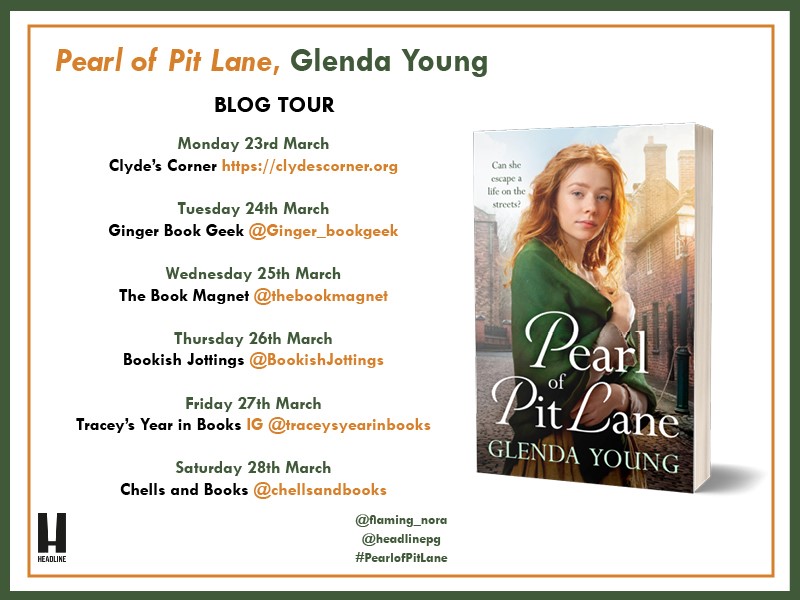
thumbnail_Pearl of Pit Lane blog tour card

Blog Tour – Triumph of the Shipyard Girls

“It has been, and probably always will be, a constant battle for us women – having to prove our worth just because we’re female – and made so much worse by the knowledge that we’re actually so much better than the men.”

Becoming emotionally invested in a series, regardless of its format, is a risky game. There is always a feeling of inner conflict between a sense of loyalty to the characters and their stories, which you become so emotionally invested in, and the (sometimes questionable) choices of the writers; not unlike the whole Rachel and Joey getting together debacle on ‘Friends’, which seemed to have been clumsily thrown into the mix just to pass the time until the final series. Thankfully, I’m starting to feel quite certain that Nancy Revell is never going to put her loyal ‘Shipyard Girls’ fans through such trauma; since each instalment seems to be even better than the last. On that note, now that this series has a fairly established following, what are we calling ourselves? If Taylor Swift has ‘Swifties’, does that make us ‘Revellers’, perhaps? We’ll find it.

So, here we are in book eight and with the story lines still feeling as fresh as ever (phew). I believe ‘Triumph’ is book eight of twelve, but I could also be making that up – Nancy please feel free to shout at me if I just accidentally either sold you short or added to your workload. I’ve said it before, and will no doubt continue saying it every time a new ‘Shipyard Girls’ book drops, but it must be a really difficult task managing to keep a set of familiar characters and story lines feeling new and exciting for loyal readers over so many instalments; I don’t know how Nancy Revell manages this, but whatever she is doing is working perfectly. I’m a classic binger of everything; books, T.V. programmes, Haribo fizzy cola bottles – my patience (or lack of) never allows me to savour anything, so if this were my series, the story would definitely have been rushed through in a maximum of two fairly low quality installments. Infuriating as it was to finish ‘Triumph’ and still not have some of the answers I wanted, this frustration has now been channeled into unrelenting excitement for the next book.

The great thing about having a longer series is of course that it gives the author plenty of scope to play around with character development. I’m not entirely sure how this happened, it seems to have emerged as mysteriously as the lower pack pain which emerges as one approaches thirty, but I’m somehow now firmly pro-Helen. The biggest step towards this was of course within ‘Courage of the Shipyard Girls‘ and the dramatic final scenes in that book, but the drip-drip effect has continued and for some reason all of my earlier bitterness towards her has gone. Like when Geri re-joined the Spice Girls, it just…works. All the nastiness seems to have been forgotten, or just doesn’t feel important any more. Kudos to Nancy Revell, because that cannot have been an easy manoeuvre to orchestrate, sort of like trying to parallel park uphill.

“She had a habit of plunging into life – and more so, love – head first, only to resurface and find herself surrounded by chaos.”

Although I have a soft spot for all of our girls in this series (obviously except you, Miriam), Polly and Rosie have always been my two favourites; and both of them taking more of a central role within ‘Triumph’ suited me perfectly. Like most readers of this series, I’d always had my theories about Rosie’s past so it was nice to have that curious itch scratched within this instalment; and to see some continuation of positive things happening to our lovely Polly, finally! Of course Nancy Revell has once again served her readers a hefty dose of drama with a side of increased blood pressure whilst it unfolds before your eyes, but I feel like ‘Triumph’ may have been the most positive book in the series yet. By ‘positive’ I don’t mean that the others are all rubbish, far from it, but it felt like having a nice catch up with old friends and was lovely to hear that things are, generally speaking, going well for all of my girls at the moment. With all the other horrible things which have gone on, both within the lives of our Shipyard Girls and in the scary real world at the moment, it was nice to have a little pocket of positivity to enjoy within all the hideousness, and very much needed.

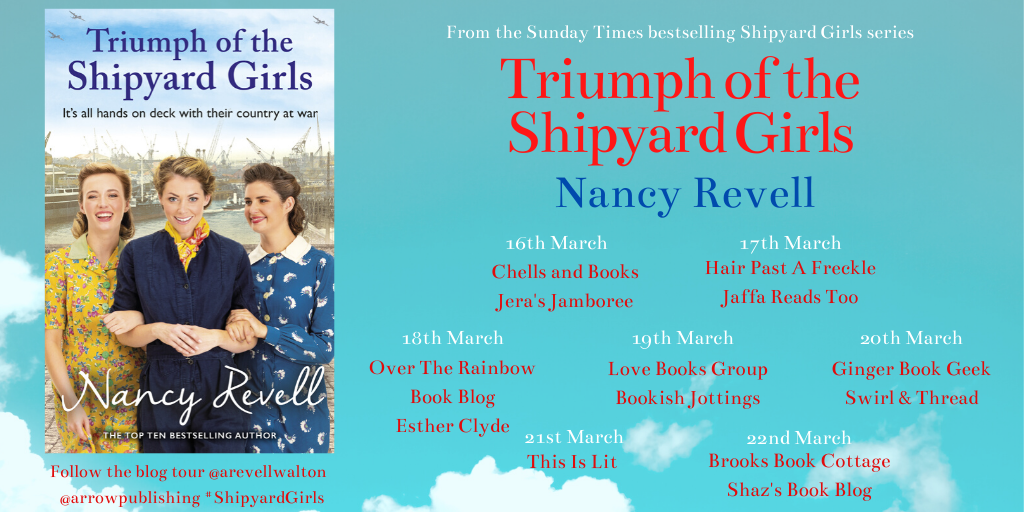
Triumph of the Shipyard Girls Blog Tour Banner

Why not have a look at the rest of the blog tour for more ‘Shipyard Girls’ hype?

Why Does Writing Make Me Feel Naked?

Obviously, writing is something that I generally enjoy; I wouldn’t have gone to the trouble of setting up a blog if I didn’t (although, as always, I’ve neglected it for the first two months of this year – we’ll come back to that). However, recently, writing has become like every relationship I had when I was a teenager in that it has swung like a pendulum between being the best thing in the world, the only thing I want to focus on for entire days and nights at a time, and simultaneously the worst thing ever and something which I deeply regret ever starting. I think that is probably something which everyone has experienced at some point in their life; we’ve all had that one hideously long job application form or academic project (I’m looking at you, dissertation which I still wince at the sight of), but frig me, creative writing is another beast entirely. I’ve probably said it before, but will most definitely be saying it again, full time writers do not get enough credit.

So, as you’ve probably now guessed, the main reason for having recently ghosted this blog is not because I didn’t feel like writing – quite the opposite. No, I’m not going to discuss it on here because said project which has consumed the last two months of my life is probably totally rubbish anyway and will never come to anything. But, in completing it, I had to put myself through the hideous experience of actually allowing other people to read something which I had written. Again, full time writers do not get enough credit. Unfortunately, reading and writing have a weird, dichotomous relationship. Much like the chicken and the egg, the existence of one implies the other, and so the completion of any writing project is, although satisfying, terrifying because it brings the inevitable necessity of having to let someone else read it. As an anxiety-riddled introvert, this is basically my nightmare.

Even though a significant portion of my ‘day job’ involves writing really long reports and recommendations which get scrutinised by lots of other people, anticipating feedback on any of those has never felt half as daunting as it did to allow someone to read something which I’d made up in my head without any prior instruction. Honestly, the whole thing had me feeling a bit exposed; every word of this project had existed somewhere in my subconscience and was transmitted onto paper (or Microsoft Word, this is 2020 after all) through the filters of my brain and personality, so allowing someone else to cast an opinion over it felt like I was about to appear on ‘Naked Attraction’. And, just when I was getting semi-comfortable with the idea of strangers reading it, I then found myself in the hideously awkward position of needing a close friend to fact check it and give feedback. Again, somehow it felt even more excruciatingly awkward having a friend see it rather than a total stranger; much like being on ‘Naked Attraction’. For the record, I have never been on that programme and have no intention of ever participating; I also don’t actively watch it except when it makes an appearance on ‘Gogglebox’ (which I watch religiously), but if I ever found myself in a stituation where I had to be naked in front of people where it wasn’t medically necessary, I think it would probably be easier to do so in the presence of total strangers whom I would likely never see again, rather than someone I already knew, which would most likely lead to a lifetime of uncomfortable eye contact and avoidance of each other at social gatherings.

Basically, writing on a blog is fairly painless, since I don’t usually know who has or hasn’t read it, and if people do, then they generally seem to keep their opinions to themselves, which is preferred; but writing something which needs to be seen by other people, is really scary and made me feel completely exposed. To make matters worse, I had to leave said project with my friend so that she has time to read it; cue at least a week of heightened anxiety through fretting over what she’s thinking as she reads it. I often say that I would love to be a full time writer, but if this experience is anything to go by, I might need a thicker skin before I attempt it, because the idea of something I wrote being readily available for other people (including my friends and family) to judge, has me feeling like I’m in that horrible dream where you turn up to school with no clothes on. Forget charging into burning buildings or fighting crime, introverted writers are the real brave ones; and I don’t know how any of you do it.

My Year in Five Books

At the end of last year, I set myself the difficult task of choosing five highlights from the mass of books I had managed to consume within the previous twelve months; and, throughout December, I am very much a traditionalist so have decided to do the same again. I have not counted the individual books which I have read this year, though I can say with confidence that the total will absolutely be lower than last year’s impressive forty six. Hey, it’s been a very busy year at work and with getting married in August I barely had the energy to hold a book upright never mind read one most days; though having said that, a nicer way of putting it might be to say that I went for quality over quantity in my reading material this year, which is clearly evidenced by the excellent selection of top-tier books mentioned below.

The Five – Hallie Rubenhold

No, this list is not in any kind of ranking order, but ironically this one is called ‘The Five’. One of the few genres which is able to pique my enthusiasm as much as historical fiction is true crime, so when a colleague mentioned ‘The Five’ and how it covers the real life stories of each of the victims of Jack the Ripper in Victorian London, I was hooked from the synopsis alone. I’m not sure how much creative freedom Hallie Rubenhold was able to use within their stories; I would imagine a fair amount would be needed when trying to piece together accounts of the lives of relatively unknown women from records which were made over a century ago.

However, either way, it was clear throughout the book that the author had put a huge amount of effort into preserving what few historical records were available for these women, but was able to present them in a way that was as easy to read as any other fictional story, which is certainly no easy task. I was completely dumbstruck to learn that the majority of Ripper victims were not actually prostitutes, and most of them began life in an entirely different social context to that in which they died, and I am ashamed to admit that I had always believed the media hype that the Ripper was a killer of sex workers, which perpetuates the wider myth that this is all the victims’ lives were. From a feminist point of view, I felt a bit sheepish to have had that stereotype entirely disproven by walking in the victims’ shoes and experiencing the complex lives of these five interesting women from their own unique perspectives.

The Lighthouse Keeper’s Daughter – Hazel Gaynor

This one is probably a bit of a lazy or a cop-out point to include, since I did already give this book its own individual review earlier this year, however it is absolutely deserving of a second mention, and was quite possibly my favourite literary discovery of the past year. Having grown up spending the majority of my youth in Northumberland, I have always been well-versed in the legendary story of Grace Darling; but she is sadly a heroine who receives quite minimal attention outside of the geographical area within which she existed, and I’m certainly not aware of any other fictional novels about her life (though please do send me links via my home page if they do exist).

As with ‘The Five’, breathing new life into a story with which people may already be familiar through historical documentation is no easy feat, and very little is known about Ms Darling’s life since she was famously very private. However, Hazel Gaynor manages to humanise the legendary figure through the suggestion of a possible secret romance which, although history suggests is unlikely to have happened, is really thrilling to imagine and is communicated with such care and dignity so as not to undermine the factual accounts of her life that it was an absolute joy to read.

Courage of the Shipyard Girls – Nancy Revell

Again, it’s probably a cop-out answer to include things I’ve already reviewed this year, and an instalment of a saga which I have already reviewed to death on this blog (I will not apologise for this, and will continue to fill this page with more Shipyard Girls-related hype for as long as Nancy Revell continues to grace us with it); but when I really thought about this list, Courage of the Shipyard Girls is something which immediately jumps out to me as a book which I vividly remember enjoying this year, so it can stay.

Although I love the whole saga, this specific book continues to stand out to me as the highlight of the series, in terms of character development and the emotional impact of various climatic plot twists which genuinely left me in tears as the story concluded; and although I am always an advocate of any saga being read in the correct chronological order, Courage of the Shipyard Girls forms the exception to this rule, and I would say that if you are only able to read one book from this saga for some reason, then make it this one.

The Horsekeeper’s Daughter – Jane Gulliford Lowes 

Yet another cop-out answer, but really, if a book is so good that it makes my top five in an entire year, then it makes logical sense that I would have already enjoyed it enough to decide to give it its own post, yes? Quite similarly to ‘The Five’, this is an odd mix of fact and fiction, which follows the very real Sarah Marshall on her journey as a migrant to Australia in the late nineteenth and early twentieth century. Although it isn’t written through the voice of the main ‘character’, the author manages to achieve a delicate balance of allowing the protagonist’s voice to be heard through the personal touches she adds to existing concrete facts; so it reads very much like any other historical fiction book despite being very much a factual account of real events. I must admit that when this was first recommended to me, I was sceptical and thought ‘surely that can’t really work, it’s either fictional or it isn’t’. However, Jane Gulliford-Lowes’ writing talent expands far beyond my scepticism, and within ‘The Horsekeeper’s Daughter’ she creatively masquerades a sequence of hisorical facts as a really enjoyable piece of prose – it’s like the literary equivalent of a Sunday afternoon blockbuster on TV, it just ticks every box for a relaxing yet intriguing read.

Our House – Louise Candlish

‘Finally!’ I hear you exclaim, something which I haven’t already bored you with by rambling on about it earlier in the year. I genuinely have no idea why I didn’t allow ‘Our House’ its own review; and I will confess that I just spent a good few minutes scrolling through my own content, having previously been convinced that I did. Evidently I did not, and I cannot explain why because I recommended this book to pretty much everyone I spoke to back in March. The mind boggles. Anyway, I picked this book up in the Waterstone’s ‘buy one get one half price’ bin when I was buying something else, and I must admit thrillers are not my usual choice (as clearly evidenced by the barrage of historical fiction I’ve just thrown at you in the last few paragraphs), but something about this book struck me, and once I started reading it I began to understand why.

The story begins with a woman returning home and discovering total strangers moving into her house, which has been emptied of all its contents and bought by someone else. Initially, I thought this was going to be a kind of ghost story because it seemed so improbable, but in a very ‘Gone Girl’-esque twist of a marriage turned sour and a husband and wife working against each other, I discovered that her husband had mysteriously disappeared and had had the house legally sold without her realising; which is communicated excellently through a totally unbelievable plot which holds more twists and turns than a back road through rural countryside.


Is ‘the book version’ Always Better?

“If I ever get a book published and then allow someone to make a film out of it, please shoot me directly in the face” – me, consistently throughout my adult life.

Perhaps that statement may be a bit strong, yes, but any book lover can relate to the internal anxiety of “the film version” of a treasured book being released. It is just truly horrible, but I don’t think anyone has ever managed to comprehensively explain why. For me, I honestly find it invasive and as if someone has stolen thoughts and memories from my own brain and re-interpreted them without my permission. Oh, the endless arguments of “but they missed out the best part!” with my literary challenged friends as we leave the cinema. However, after the absolute insanity that was BBC One’s adaptation of A Christmas Carol was on TV this week; I found myself in a position I don’t often find myself in – having logic used by someone else to disprove something I’ve said. Specifically I was mid-rant (as I often seem to find myself), having played the “they didn’t use ANY of the original text” card, to which a friend said “but it’s an interpretation; if you want the original text go and re-read the book.” Valid points were made.

Before I go any further on this, I feel like I need to name and shame some worst offenders here, purely as a means of cleansing my soul like an exorcism.

“Me Before You” – book by Jojo Moyes. Where to even begin? The main issues I had with this ‘interpretation’ are twofold: primarily, the relationship between Will and Louisa was never about romance and never had that element to it, at least not in the version in my head. Secondly, Will’s dad feeling trapped in a loveless marriage because of a need to care for him was a significant factor in the decision to end his life, which made sense, yet was completely omitted which just made Will seem a bit selfish for wanting to die with no real legitimate reason, especially when, in film land, he has his lovey-dovey, doting girlfriend to live for now. Just, why?

“The Golden Compass” – adapted from His Dark Materials by Philip Pullman. I was actually so offended by this very concept that I haven’t seen any more than the trailer. Why would you take a concept from a book, base a film on it, and then have the AUDACITY to re-name said concept. A “golden compass” is not even a thing. It’s an alethiometer, and your film idea is stupid.

“The Girl on the Train” – book by Paula Hawkins. Confession time, I actually don’t dislike this film. It’s so Autumnal that I do quite like to watch it in October, just as the dark nights are starting. However, the film and the book are essentially different stories which just happen to share a name because they are such polarised interpretations of the same characters. Also, why hire a British actress to play a British character, and then randomly set it in America? Not knowing the answer to that question is probably the reason I sometimes can’t fall asleep at night.

Moving back to my original point, perhaps the issue here is that I need to un-learn the use of the phrase “film version” and change it to “interpretation”. Much like the endless “Edward or Jacob” debate which spanned from ‘Twilight’ years before it was immortalised in tween culture by Kristen Stewart (although not really a debate because the obvious and only correct answer is Jacob); books are subject to a huge range of interpretations based on text alone, and that can be even before they get “turned into” films, if they are ever at all. I had a similar debate with a friend who also loved “Elizabeth is Missing” by Emma Healey (tremendous read if you haven’t yet come across it); after we both watched the TV film version and had entirely different reactions. I was appalled at the notion that it had turned the story into an overly emotional, upsetting personification of the harsh reality that is Alzheimer’s and strayed away from being a great mystery novel which happened to be portrayed through the main character having Alzheimer’s. At this point, my friend looked me square in the face and said “did we read the same book?”.

Whilst I can confirm that we did, in fact, read the exact same book (even the same physical copy as I lent it to her), unfortunately we both have different brains and personalities, so we interpreted it differently and, to my shock and horror, it would seem that ‘my’ understanding is not necessarily the correct one. I know, I’m still coming down from the surprise of this myself. So, with my newfound acceptance of film adaptations of treasured books as being ‘one person’s interpretation’ of a story and not a personal attack on my love of particular books, I went to see the new Little Women this week and I actually really enjoyed seeing beloved characters come to life on screen. In fact, I would go as far as saying I liked this version of Little Women better than the book, because I seem to be the only person who read that book and didn’t want Jo and Laurie to get together. I personally thought Laurie and Amy made a much better match because Jo is a free spirit who cannot be tamed and Laurie is kind of pathetic, like Amy, which is the angle Greta Gerwig seems to have taken and it absolutely worked. Perhaps like the urban legend about the woman who bought a snake which then began measuring her each night in preparation for eventually eating her, all stories are eventually told in various versions and, although we all have our favourites, that might not necessarily make others wrong?

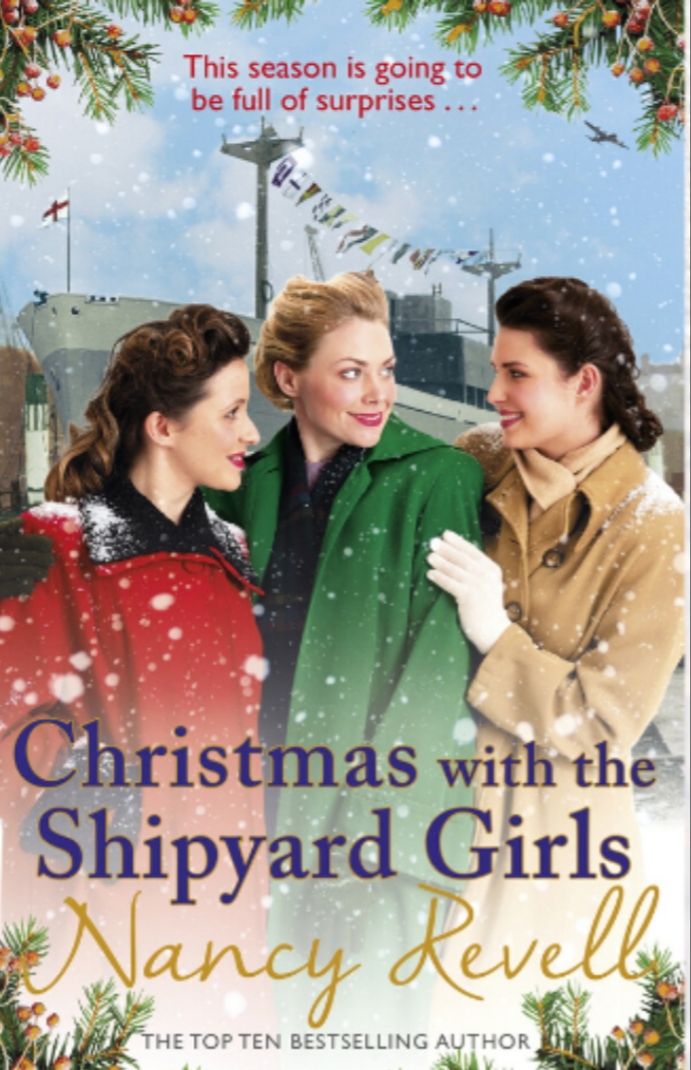
Review – Christmas with the Shipyard Girls

“Sometimes in life, love has to be sacrificed for a greater love.”

Yes, that time of year seems to be upon us once again. No, not just me getting prematurely excited about Christmas before the clocks have even changed, but me getting excited about a new installment of my favourite saga which features the best girl-power tribe since the Spice Girls. Although, The Shipyard Girls is set fifty years before Girl Power stormed into our lives one platform shoe at a time, so maybe our squad of welders were actually the original? The timeline boundaries between fictional and non-fictional feminist heroes are not entirely clear.

As usual, I digress. Christmas with the Shipyard Girls is, maybe second only to the Gavin and Stacey reboot, the Christmas special we have all been waiting for. I love Christmas, and as you’re all well aware by now, I love this saga; so I felt an odd mix of excitement and apprehension ahead of reading it, with my main thought being “please, please don’t mess this up, Nancy.” Needless to say, of course Nancy Revell has once again, smashed it. I love a Christmas spin-off of an existing saga – like a TV special, it’s always exciting to see your favourite characters against a festive backdrop, but a common mistake with Christmas editions is to have a short novella which, although usually festive enough that you can practically smell the roasting chestnuts diffusing from the pages, don’t actually have much of a ‘point’. Christmas with the Shipyard Girls however, I was pleased to discover, is actually a full-length novel with a good, meaty plot which happens to take place around the festive season; i.e. not one of those mistletoe-infused, pointless novellas which are clearly just marketing ploys to boost royalties (she says like she doesn’t also buy those whenever they come out).

Ironically for a Christmas story, I think this is possibly the darkest intstalment in this saga so far. Not in a depressing way, but we’re now almost half way through the war and that is clearly starting to take a significant toll on our characters. We’ve had some really impactful, emotional moments in previous stories (still not over the air raid at the end of ‘Victory’), but this was the first time I’ve read a Shipyard Girls book, or anything for that matter, and felt consistently emotional throughout – I found myself reading the entire thing with tears prickling in the back of my eyes. Having said that, I think it’s definitely important to include the darker or more challenging sides of the characters’ journeys, it would’ve been really easy for Nancy Revell to turn this into a Bing Crosby-esque yuletide scene of all our principal characters enjoying the festivities by a warm fire as if they were drawn on a Christmas card. Unfortunately, although they certainly made the festive season as magical as possible, the sad fact remains that this is a group of people who are existing in one of, if not the most, tumultuous and challenging periods of modern history.

The relationship between Polly and Tommy is very much in the foreground at this point in the saga, and although I don’t want to spoil it for anyone who hasn’t finished yet, I initially found myself firmly cemented on ‘team Polly’. It reminded me of an ongoing discussion within my friendship group, in which most of us are in agreement of ‘I could never have a boyfriend who was in the army, imagine that lifestyle and periods of not knowing where he was, why would you do that to yourself?’. Thankfully, we are all lucky enough to live in a period where we have that choice, but unfortunately for Polly, and most other women of her time, sometimes that choice was taken away from them, and the context in which she is living intensifies every emotion like petrol on a bonfire which, as always, Nancy Revell evokes perfectly for the reader.

“Polly and Tommy’s love had become another casualty of this damned war.”

Despite the darker elements of the story, as always Nancy Revell has graced us with yet another gripping plot, which is also peppered with little pockets of emotion which remind us of the intense bond shared by these characters. My favourite part was when Martha and her parents receive the gift basket in true ‘A Christmas Carol’ style. Although this made little, if any, difference to the overall plot, it was the most genuinely touching moment – and Martha going to bed on Christmas Eve with her hot chocolate and biscuits gave me an image of her as Tiny Tim which, for any existing Shipyard Girls reader, is just heartwarmingly hilarious.

Although Christmas with the Shipyard Girls isn’t explicitly ‘Christmassy’ throughout every chapter; the generosity, selflessness and love between all the characters flows through every page, showing the ‘true’ meaning of the season of good will, before building up to the festive finale which is sure to ignite that warm, festive feeling in even the most ‘humbug’ of grinches.

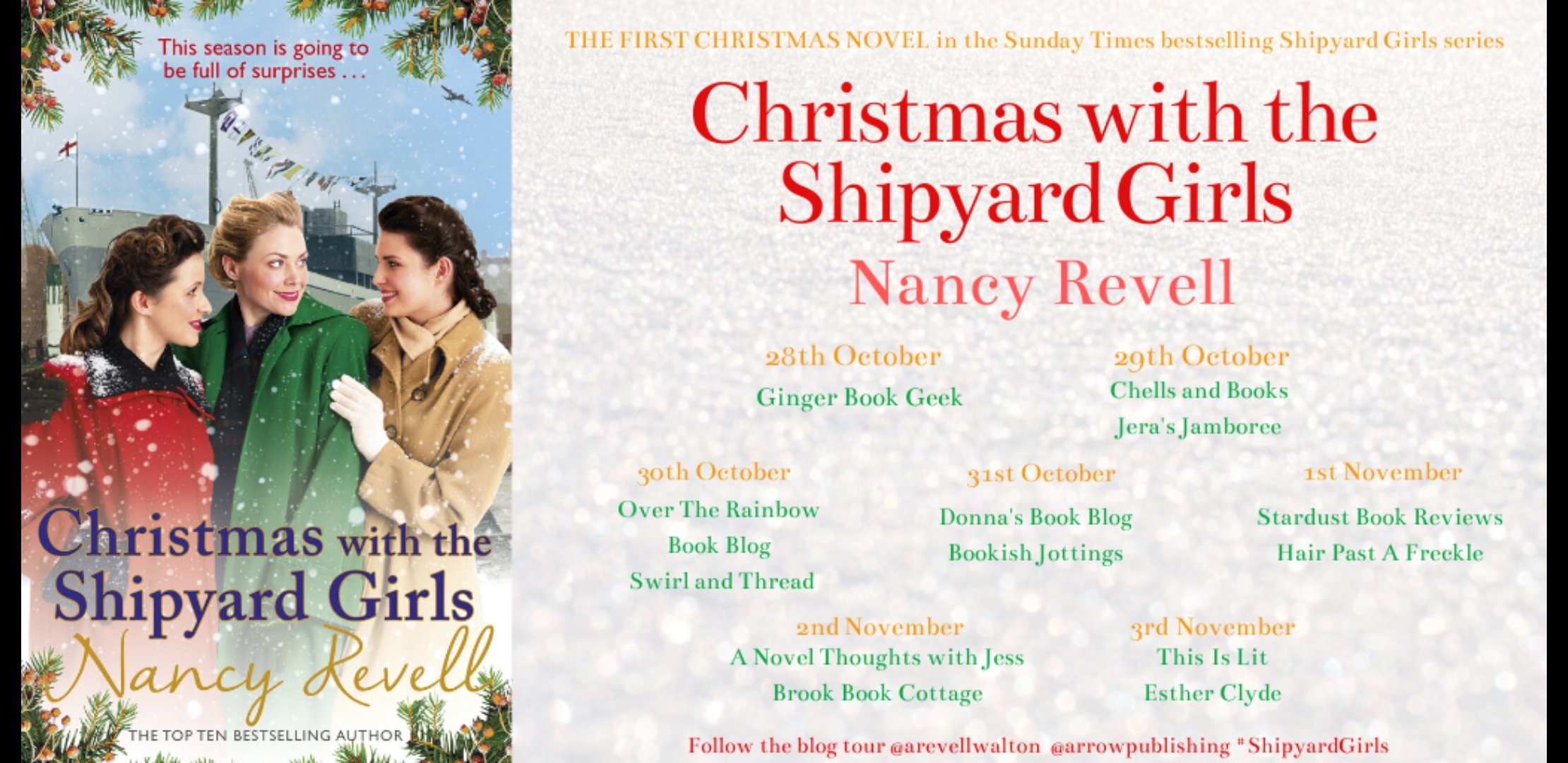
Why not have a look at the rest of the blog tour?

Unpopular Opinion: Literary Edition

I don’t know where the recent obsession with ‘unpopular opinions’ came from, but it seems to be the new ‘no offence’ – phrases which, although overused, seem to make it perfectly justifiable to say something controversial and/or offensive if your comment is preceeded by those two little words. However, as irritating as I find the Radio 1 segment of ‘unpopular opinion’ (that theme tune is the Playdays theme, how on Earth did they get that through copyright, and how dare they ruin a cherished childhood TV show); a feature which seems to be code for ‘let’s just all have a rant about minor inconveniences in our lives’, I am both a feminist and a chatty Northerner and therefore a big believer in expressing one’s opinion, however ‘unpopular’ it may be. Literary opinions, I find, are often even more divisive, so I have bravely decided to challenge the status quo around the written word; and am hoping to boldly shake things up by causing even more of a stir than ‘Lady Chatterley’s Lover’.

Harry Potter is not good. 

Okay so I probably lost the majority of you at that point, but hear me out. Conceptually, Hogwarts is a great idea in itself – it is quite original if you discount baiscally every specific character and magical spell, all of which have largely been copied and pasted from a Wikipedia page on Greek Mythology, though I am a big fan of magical realism so these books definitely paved the way for more in this genre, and I am always in favour of women making careers for themselves – J.K. Rowling is a really great influential woman. BUT, her writing is not good. I’m sorry, but the sentence structure is terrible, her laptop clearly had no ‘synonyms’ function because every other word is the same, and they are just. too. long. for. children.

The ‘Twilight’ Saga really isn’t actually bad.

The odd couple of people who accepted the first point have probably now closed this window on their browser, but if you are still here, please hear me out. The films are absolutely terrible, we can all accept that and move on. That is a discussion for another day. But the ‘Twilight’ saga, is actually pretty damn good. I read all four books before any of the films came out, so I’m probably one of few people who were truly objective about it, and it really is a travesty when a terrible film ruins a truly good book *cough* Gone Girl *cough, cough*. The main things which irritate me about ‘Twilight’ critics is the unbridled hatred for Bella Swan. “She’s too quiet”, “she’s pathetic”, “she’s too plain” – I’m sorry, can anyone locate a teenage girl who is NOT quiet, shy, a bit plain looking and completely pathetic when it comes to a hot boy? We were ALL Bella Swan at some stage in our lives, and for me the release of this saga coincided with my awkward phase of admiring boys from a distance, wishing I had a decent pair of tits or a wardrobe with something other than plaid shirts and yearning for the universe to give me some self confidence – Bella Swan is the relatabale hero which we all need at some point in our lives. In a world of Hannah Montanas and Kendal Jenners, be a Bella Swan. Believe me, having a Bella Swan phase does wonders for developing resilience as an adult, not to mention an excellent grasp of self-depricating humour.

Stephanie Meyer is actually a good writer as well. So, even if you don’t like the overall concept of ‘Twilight’, it has the edge over sagas in that it is actually an engaging read. I do however accept that Breaking Dawn was entirely unnecessary and, if it absoutely had to be published, did not need to be so long and drawn out (I have a slight suspicion it was actually written by J.K. Rowling), but Twilight does not deserve the level of hate it gets, not one bit. But, if you really can’t damage your social status by being seen with a Twilight book, ‘Shiver’ by Maggie Stiefvater is definitely worth looking into; very similar concept but, you know, better in that you don’t have to picture Robert Pattinson’s slightly pained facial expressions when you read it.

Anne is the best Bronte sister

It goes without saying that the Bronte sisters are all a hugely important part of literary history and Feminism. All three were absolute trailblazers and I don’t dislike any of them. However, Wuthering Heights is absolutely and utterly terrible. That novel is the Twilight of the nineteenth century; Heathcliff brooding over his own misery and kind of being a d*ck to everyone because he isn’t with the girl he likes, which has only occurred through his own self loathing and punishment, and Cathy being unable to function without his weird, narcissistic and controlling persona – that is Bella and Edward at their worst. Cathy in her room refusing to eat? That is ‘New Moon’ Bella who is literally prepared to lie on the ground in a dark forest and then isolate herself for like a year because she is too pathetic to function without her aloof man. Maybe in a hundred years GCSE students will be studying ‘Twilight ‘and discussing if the wildness of the Forks forests is indicative of the wildness of Edward’s character like the Moors and Heathcliff, but honestly I do not understand the obsession with Wuthering Heights. It’s badly written, drones on a lot and is just utterly depressing.

Jane Eyre on the other hand? Hello, feminist empowerment. I have never seen a TV or film adaptation of Jane Eyre, and I don’t need to. That book is just perfect, although the ending is a bit questionable – I mean, she’s so fiercely independent that she is prepared to sleep in the field rather than rely on the weird, old, MARRIED, man she fancies; but then ends up with him in the end? What’s that about? Which brings me to, the absoulute MASTERPIECE that is ‘The Tenant of Wildfell Hall’. I know an English teacher who has not even read this book. Anne is such an overlooked Bronte sister and it deeply upsets me because that story would be divisive even today – romance from the point of view of a heterosexual man pursuing a woman? A woman who has fled an abusive relationship who isn’t damaged or in need of saving by the new man? Unheard of, yet incredibly refreshing and empowering. Anne, on behalf of the reading community globally, I would just like to take this opportunity to apologise for treating you like Michael Collins on Apollo 11. Go on, Google who that is, and you’ll get the joke.

Historical fiction can and should be enjoyed by young people.

Anyone who has looked at this blog will be well aware that I love a historical fiction saga. The Shipyard Girls gives me life, Rosie Goodwin and Glenda Young literally could not churn out a bad novel if they tried; basically I will read anything that takes place prior to 1960. But, for some reason, historical sagas like this are almost exclusively marketed at women over 60. The same applies for ‘teen’ and ‘young adult’ fiction. Apart from books which help children how to read and those which contain some distressing or inappropriate content, I do not understand how fiction can be marketed at particular ages, or even genders. I just don’t get it. You don’t go to the cinema and say “what’s new in the ages 14-16 section this week?” or “what’s being pushed on the twenty-something women via Heat Magazine this month?”. Everyone I have ever met enjoys an absolute array of film genres, so why do we restrict ourselves with books? I know people who will exclusively read crime, or exclusively read romance – why are you doing that to yourself? I enjoy Silence of the Lambs as much as Bridget Jones, and as much as Frozen; film choices depend what ‘mood’ you’re in, and it’s absolutely the same with books. Snobbery is what it is if I’m going to be quite frank, and I can’t chuffing stand it.

So, if you’ve made it this far without recoiling in disgust at my defence of Bella Swan and slating of J.K. Rowling – to the majority of the reading community that’s like saying the American version of The Inbetweeners was better than the original. But, I’m comfortable with who I am and absolutely believe we should all let our literary freak flags fly and read whatever the hell we want to without judgement because what’s the worst that could happen – you find a new series that you love?